


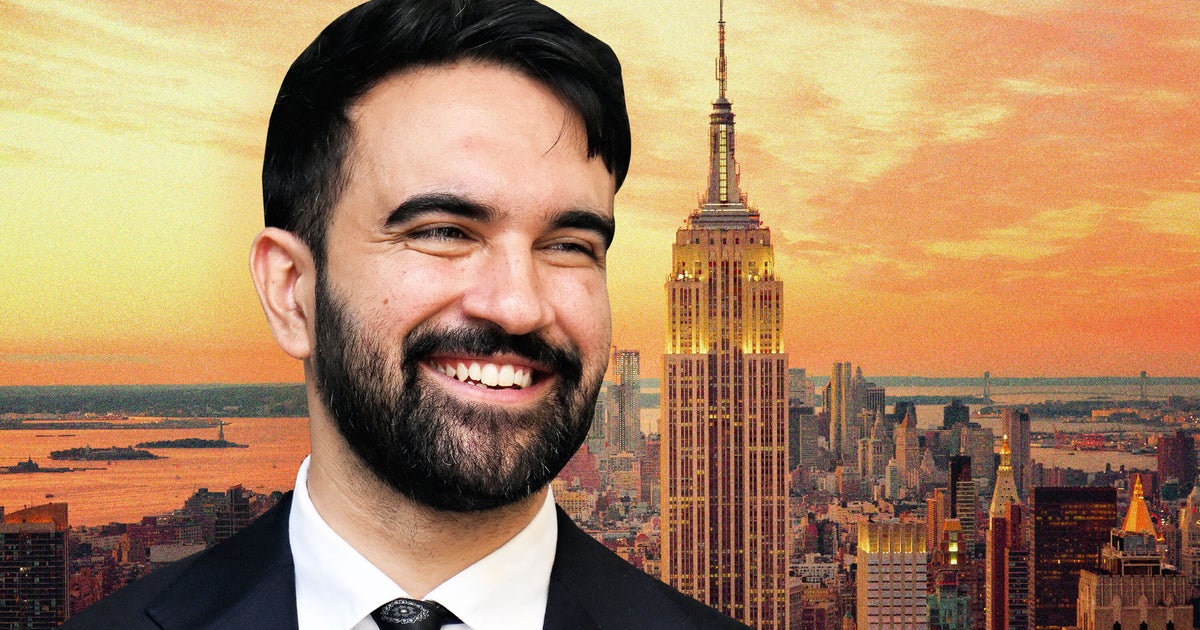
New York State Assemblymember Zohran Mamdani is projected to win the election to be New York City’s next mayor, bringing a democratic socialist agenda to America’s largest city and defeating Andrew Cuomo, the heir to a political dynasty.
Mamdani will be New York city’s first Muslim and South Asian mayor, and its youngest in over a century.
Mamdani didn’t just win ― he won big, with networks calling the race quickly after polls closed. Voter turnout was the highest the city had seen in decades for a mayoral race, with over 2 million votes cast, according to city election officials. Taken together, Mamdani not only won the mayoralty, but arguably also a mandate from voters to aggressively pursue his vision for the city.
Speaking to supporters at his victory party Tuesday night, Mamdani began by quoting a fellow socialist.
“The sun may have set over our city this evening, but as Eugene Debs once said, ‘I can see the dawn of a better day for humanity,’” he said to raucous cheers.
“My friends, we have toppled a political dynasty,” he added. “I wish Andrew Cuomo only the best in private life, but let tonight be the final time I utter his name as we turn the page on a politics that abandons the many and answers only to the few.”
Mamdani said his victory was a sign that “hope is alive.”
“We won because we insisted that no longer would politics be something that is done to us,” he said. “Now, it is something that we do.”
Reflecting on the race, the mayor-elect noted the tens of millions of dollars in attack ads spent against him.
“As has so often occurred, the billionaire class has sought to convince those making $30 an hour that their enemies are those earning $20 an hour,” Mamdani said. “They want the people to fight amongst ourselves so that we remain distracted from the work of remaking a long broken system. We refuse to let them dictate the rules of the game anymore.”
He then turned his attention to President Donald Trump. “Since I know you’re watching, I have four words for you: Turn the volume up!”
“We will hold bad landlords to account because the Donald Trumps of our city have grown far too comfortable taking advantage of their tenants,” he continued.
“We will put an end to the culture of corruption that has allowed billionaires like Trump to evade taxation and exploit tax breaks. We will stand alongside unions and expand labor protections because we know, just as Donald Trump does, that when working people have ironclad rights, the bosses who seek to extort them become very small indeed. [And] New York will remain a city of immigrants, a city built by immigrants, powered by immigrants, and as of tonight, led by an immigrant.”
“So hear me, President Trump, when I say this, to get to any of us, you will have to get through all of us.”
The crowd at Mamdani’s election night party at the Brooklyn Paramount theater — a group that represented the city’s vastly diverse population — was overjoyed at his victory, bursting into cheers earlier Tuesday night every time his name appeared on large screens that were broadcasting the news.
A pair of volunteers told HuffPost they were inspired by the energy behind the campaign, and hoped that the national Democratic Party was taking notice.
“The world is watching,” said David Sewell, who helped organize volunteers. “This is what people want.”
He noted that the campaign was connecting with people from around the country and abroad. Volunteers included some Europeans who pitched in to help canvas the city’s neighborhoods, even though they could not, of course, vote in the election.
In the corridors of the enormous venue came occasional shouts: “Zoh-ran!”
Mamdani Ran On Affordability Agenda
The three-term state lawmaker won the mayoralty on a simple message: Make the most expensive city in the country affordable for working people.
By mid-summer, when Mamdani shocked Cuomo with an underdog’s upset in the Democratic primary ― ultimately beating him by nearly 13 points ― Mamdani’s rally crowds could finish his sentences for him. He was running to freeze the... “rent!” Make buses fast and... “free!” And deliver universal... “child care!” That policy trio became a hallmark of the campaign.
“These are not just slogans, these are commitments,” the 34-year-old said at a massive rally in Queens’ Forest Hills Stadium ahead of the election. “We say them not simply to inspire, but because it’s what we will deliver.”
At Tuesday night’s party, he added a coda to that pledge: “Let the words we’ve spoken together, the dreams we’ve dreamt together, become the agenda we deliver together.”
Mamdani had an extensive platform, but he focused on the more than 2 million New Yorkers who live in rent-stabilized buildings ― the rents he proposes to freeze ― and the millions more who struggle with slow public transport, and the burden of child care and day-to-day essentials. He has proposed establishing free child care for children 6 weeks to 5 years old, opening one city-run grocery store in each borough, spending billions accelerating the pace of affordable housing construction, and easing regulations that slow down even market-rate construction.
He has acknowledged he’ll need to work with Gov. Kathy Hochul (D) and the Democratic majorities in the state legislature to get his agenda done, namely, by having them approve tax increases on corporations and the wealthy to raise billions of dollars in new revenue.
Cuomo, the son of former New York Gov. Mario Cuomo (D) and a former governor himself, pitched his campaign as one of experience and pragmatism. But he left New York’s governor’s mansion in disgrace in 2021, accused by multiple women of sexual harassment. (Cuomo has denied wrongdoing.)
Mamdani used Cuomo’s record against him on the campaign trail.
“What I don’t have in experience I make up for in integrity, and what you don’t have in integrity you could never make up for in experience,” Mamdani told Cuomo during a recent debate.
Mamdani combined his progressive agenda and young-upstart image with a relentless ground game and an innovative media presence.
In a series of viral ads that punctuated the yearlong campaign, Mamdani interviewed New Yorkers who voted for Trump, plunged into icy Atlantic waters to illustrate his rent freeze proposal, discussed how the city’s scarce street food permits led to “halal-flation,” and walked the entirety of Manhattan from top to bottom.
Mamdani filmed ads not only in English, but also multiple in Spanish as well as those in Bangla, Urdu/Hindi and Arabic. He gave an interview to a Yiddish newspaper, and allies of the campaign made a pitch in Chinese. Along the way, the candidate popped up at dozens of concerts, drag shows and religious events across the city.
The final stretch of the campaign showcased Mamdani’s shoe-leather style. Over just a few days, he spent the night shift with taxi drivers and hospital workers; practiced tai chi and painting at senior centers; appeared in videos with several popular internet creators; popped up at the Cuco concert; celebrated Guru Nanak Gurpurab at a Sikh Gurdwara in Queens; appeared at multiple nightclubs in the early morning hours; took in a Bills game with the governor; and made brief remarks to a crowd at the halfway point of the New York City marathon. And he sat in the rafters at Madison Square Garden to watch the Knicks.
His candidacy was bolstered by strong support from political parties, including the Democratic Socialists of America and the Working Families Party, and community groups like DRUM Beats (Desis Rising Up and Moving) and CAAAV Voice (the Committee Against Anti-Asian Violence).
Mamdani canvassers have visited this reporter’s apartment building at least a half-dozen times across the primary and general election campaigns ― a testament to what Mamdani’s field director, Tascha Van Auken, said Tuesday night was the work of over 104,000 campaign volunteers. (No other campaigns knocked on my door.)
On Tuesday, the Mamdani campaign said its volunteers had cumulatively knocked on 3 million doors over the course of the campaign.

Cuomo’s Pessimistic Campaign
By contrast, Cuomo ran the ultimate insider campaign, aided by deep-pocketed donors ― including some of the same ones who’ve supported Trump ― and arguably relying on some of the same bigotry and xenophobia.
“I do not believe the city of New York has a future if Zohran Mamdami [sic] is elected mayor,” Cuomo said at one recent campaign stop, mispronouncing “Mamdani” as he usually does (his opponent’s name actually ends with an “N-I”). “I do not believe the city will survive and thrive.”
In particular, Cuomo made an issue of Mamdani’s advocacy for Palestinian human rights. Mamdani has participated in efforts to boycott Israel, described Israel’s military assault on Gaza since Oct. 7, 2023, as a genocide, and pledged to arrest Israeli Prime Minister Benjamin Netanyahu if he steps foot in New York City ― pursuant to an International Criminal Court warrant for Netanyahu’s arrest. In one interview during the primary campaign, he declined to condemn the phrase “globalize the intifada” fueling months of accusations of antisemitism. (Eventually, Mamdani said he would discourage others using the phrase.)
Cuomo pounced on that moment, and frequently brought up that Mamdani did not support the notion of Israel being a Jewish state. Mamdani said in the first debate, “I would not recognize any state’s right to exist with a system of hierarchy on the basis of race or religion.” The mayor-elect has sought to emphasize his focus on religious liberty, and protecting all religious minorities, including Jews and Muslims.
Though it’s true that Mamdani’s views on Israel make him an extreme outlier in U.S. politics ― for some, including many of New York’s nearly 1 million Jews, this is a positive ― Cuomo seemed intent on boosting racist and Islamophobic attacks focused on Mamdani’s identity.
During a radio interview, for example, Cuomo laughed along as radio host Sid Rosenberg — who’d previously called Mamdani a “terrorist antisemite” — said Cuomo’s challenger would cheer another Sept. 11 attack. Cuomo separately said in a Fox News interview that Mamdani “doesn’t understand the New York culture, the New York values, what 9/11 meant.” (Mamdani was in elementary school when the attacks occurred.)
Attacks from elected Republicans frequently went further, including smearing Mamdani as a “jihadist” and saying he should be denaturalized.
Cuomo’s campaign also posted, and quickly deleted, an ad full of artificially-generated criminals ― a domestic abuser, drug dealer, sex trafficker, a keffiyeh-clad shoplifter and others ― cheering on Mamdani, whom the ad showed eating rice with his hands and letting the men out of prison.
Incumbent Mayor Eric Adams (D) delivered a similar attack recently in the process of endorsing Cuomo.
“New York can’t be Europe, folks. I don’t know what is wrong with people. You see what is playing out in other countries because of Islamic extremism,” he said. (Adams’ own decision to drop his reelection bid and endorse Cuomo no doubt helped the former governor, but you might not know it listening to Cuomo; during a speech last month, Cuomo said that “in some ways, the city hasn’t really had a competent mayor, a competent manager, since Mayor [Michael] Bloomberg.” He later walked those comments back, with Adams standing behind him.)
After losing the Democratic mayoral primary to Mamdani in a shocking upset in June, Cuomo did not leave the race. Rather, he kept running ― just not as a Democrat. Instead, he ran on the “Fight and Deliver” party line. Cuomo registered the party line earlier this year, allowing him to stay on the ballot.
Nonetheless, key institutional Democrats largely failed to rally behind Mamdani’s campaign.
Senate Minority Leader Chuck Schumer (D-N.Y.), for example, never answered who he would vote for in the race. In September, asked by MSNBC’s Rachel Maddow if she endorsed Mamdani’s campaign, former Vice President Kamala Harris replied, “I support the Democrat in the race, sure.” House Minority Leader Hakeem Jeffries (D-N.Y.), whose congressional district covers part of Brooklyn, only endorsed Mamdani in the final day before early voting began. Asked a few days later if he thought Mamdani was the future of the Democratic Party, Jeffries said no.

Part of that hesitancy may have been Mamdani’s democratic socialist views, which Cuomo argued would lead to “a redux of the 1970 fiscal crisis” in New York City. But much of mainstream Democrats’ misgivings seemed to be related to Mamdani’s outspoken views on the human rights of the Palestinian people.
Mamdani spoke emotionally several times on the campaign trail about his Muslim faith, and about the death threats regularly hurled at him.
“To be Muslim in New York is to expect indignity, but indignity does not make us distinct,” he said in one recent speech on the Islamophobic attacks against him. “There are many New Yorkers who face it. It is the tolerance of that indignity that does.”
“Islamophobia is not seen as inexcusable,” he added. “One can incite violence against our mosques and know that condemnation will never come. Elected officials in this city can sell T-shirts calling for my deportation without any fear of accountability. The consequences amidst this inaction are stark—more than one million Muslims in this city, existing all while being made to feel as if we are guests in our own home. No more.”
In light of those attacks, one of Mamdani’s closing campaign ads was notable. Though it was filmed entirely in Arabic, it made no mention of the anti-Islam sentiment that pervaded the race.
Rather, he repeated his core campaign themes, pet a bodega cat, and pledged he would try to “make it easier to open your small business, pay your rent, and build a future in New York.”
Trump Looms
Trump was always going to hover over the city’s future, regardless of who became mayor.
Federal agents have already flooded immigration courthouses in Manhattan, making arrests of people showing up for routine check-ins, and ICE officers recently swarmed vendors in the streets nearby, making several arrests in a brazen show of force. Trump has also already held up infrastructure funds for New York.
But the president has threatened a much broader presence in the city, suggesting he could hold up even more money and increase the federal footprint in the Big Apple.
And in a “60 Minutes” interview released a few days before Election Day, the president made clear his preference in the race.
“It’s gonna be hard for me as the president to give a lot of money to New York,” Trump said.
“Because if you have a communist running New York, all you’re doing is wasting the money you’re sending there. So I don’t know that he’s won, and I’m not a fan of Cuomo one way or another, but if it’s gonna be between a bad Democrat and a communist, I’m gonna pick the bad Democrat all the time, to be honest with you.”
He reiterated that message on Truth Social later.
“Whether you personally like Andrew Cuomo or not, you really have no choice,” Trump wrote. “You must vote for him, and hope he does a fantastic job. He is capable of it, Mamdani is not!”
Cuomo, who pitched himself as being able to stand up to Trump, was clearly uncomfortable with the association.
Pressed in a radio interview the day before Election Day on Trump’s endorsement, the former governor did not have an answer.
Instead, the interview came to an abrupt end.
Sara Boboltz contributed reporting.