


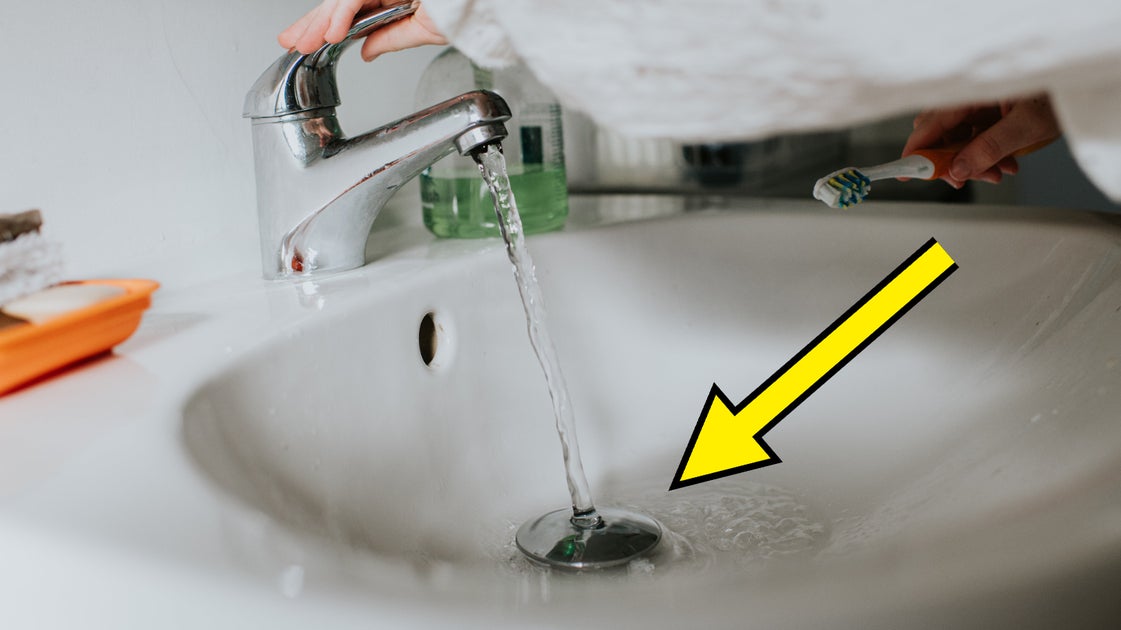
A few months ago, I noticed my bathroom sink was draining very, very slowly, so I pulled out the drain stopper to take a peek. That’s when I noticed a mysterious black sludge clinging to the sides of the stopper. My first thought was a panicked, “Is there something gross and scary lurking in my sink?”
The dark, jelly-like substance is made up of a combination of things — like residue from personal care products mixed with hair and dead skin cells — that make their way down your bathroom drain. And it’s “extremely common” in bathroom sinks, said master plumber Hendrik Vandepoll, co-owner of Service Force Plumbing in Maryland.
It’s not sewer backup, nor is it mold (though the buildup may contain small amounts of mold), “but rather a biofilm that thrives in the moisture of the sink drain,” Vandepoll told HuffPost.
“Bacteria and other microorganisms start the process by creating a sticky film that then captures toothpaste, soap, shaving cream, dead skin cells and anything else organic that goes down the drain,” he continued. “Eventually all that builds up into the gross black film you’ll see —and maybe smell — in your sink drain.”
This kind of buildup most often accumulates in bathroom sinks because they don’t typically get large volumes of water rushing through them the way drains in other parts of the home do, plumber Tyler Pittenger, drain specialist at Service Force Plumbing, told HuffPost.
“You rinse your mouth, you turn off the tap. You rinse your hands, you turn off the tap,” he explained. “Other drains in your home, like the shower, tub, or kitchen sink, get a lot more volume of water running through them, so the biofilm tends to get washed away. But in the bathroom sink drain, it just sits there, happy in its dark dampness.”
The biofilm doesn’t just muck up the stopper, either. It can go “several inches down into the upper drain, as well as under the stopper and up into the overflow passage,” said Vandepoll.

How To Get Rid Of The Black Sludge In Your Drain
The good news is that you can usually clear out the black gunk yourself without needing a professional plumber to step in.
“I get lots of calls about slow drains and smells that are caused by sludge build-up. The majority of which I handle via phone, educating the customer,” Philadelphia master plumber Kelly Ireland, owner of TPG Mechanical LLC, told HuffPost.
And while this funky gunk can result in slower drainage and some unpleasant odors, it’s generally nothing to worry about, Pittenger noted. That said, it is definitely worth cleaning on a regular basis.
To properly clean the drain, you need to know what kind of stopper you have and know how to remove it. The traditional stoppers are the ones with the lift rod near the faucet that you use to open and close the drain. To remove this type, look under the sink and unscrew the nut to pull out the horizontal rod and release the stopper.
Newer, push-button models require you to press on the stopper itself to open and close the drain. To remove these, you can usually just pull up the stopper or twist it and then pull it out.
“I would recommend either YouTubing it or watching videos on it to do it properly,” Ireland said. “Sometimes they can break when you take them apart. So just have a plumber ready in case it doesn’t go well.”
Once you’ve removed the stopper, “physical scrubbing with soap is a perfectly effective method — no need to reach for chemicals or bleach necessarily,” Pittenger said. “You can use a bottle-style brush to get down deep into the drain.”
“You can use chemicals or anti-bacterial sprays if that makes you feel better,” he added. “Make sure to clean the overflow passage as best you can, too. That can be a sneaky hiding place.”
If cleaning this area doesn’t help the drain run faster, there may be buildup or a clog in the P-trap (that’s the U-shaped section of pipe under the bathroom sink) or further down the pipe, Pittenger said.
If you’re dealing with stubborn odors from a sludgy drain, Ireland is a fan of using a foaming bleach product like Clorox Bathroom Disinfecting Cleaner. (Quick reminder: Never mix bleach with other cleaning products —including drain cleaners or vinegar. Doing so could create toxic fumes that are hazardous to your health.)
“I just spray it into the sink and let it go down the drain, and the foam kinda builds up,” Ireland explained. “And then I just [let] it sit there for a couple hours. And then I’ll pour hot water down afterwards just to clear it all out.” She also sprays it into the overflow hole because bacteria can grow in there as well.
Can You Prevent The Sludge From Coming Back?
There’s not a whole lot you can do to prevent the buildup from returning entirely “unless you stop putting bodily fluids, along with products, that normally go down a sink down the drain,” Ireland said.
But some basic steps can help slow the process a bit. You can try regularly running hot water down the bathroom sink drain, Vandepoll said.
“Still, there are lots of potential nooks and crannies in there, and the biofilm will tend to reestablish over time and need a new cleaning eventually,” he added.
At least next time the black sludge rears its ugly head, you’ll know what it is and what to do about it.