


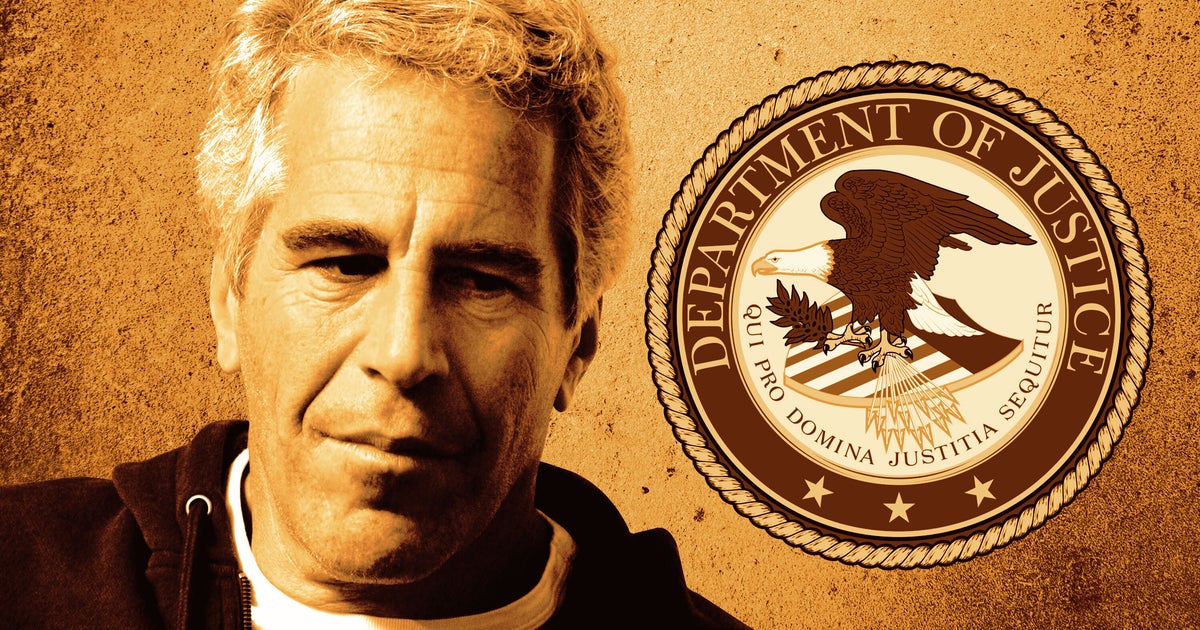
After years of peddling conspiracy theories about Jeffrey Epstein and demanding transparency on the workings of the so-called “deep state” — and failing to make good on that promise — it seems patience has run out for President Donald Trump and the pressure is on.
The Justice Department and FBI set off a firestorm among Trump supporters when they announced in an unsigned memo that they would not make any further disclosures in the case of Jeffrey Epstein, a former longtime friend of Trump who died by suicide in prison in 2019 while awaiting a federal sex trafficking trial in New York.
After an “exhaustive” review, the memo said, the Justice Department had failed to locate any “incriminating client list” that may have detailed who participated in the underage sex trafficking services Epstein facilitated.
However, the memo directly contradicted previous statements from the administration: In February, Attorney General Pam Bondi had confidently proclaimed that there was a client list “sitting on my desk right now to review.” And when the Department of Justice released declassified files on Epstein in that same month, they specifically hailed it as a “first phase,” while the White House had a ceremony for the release of the files — which turned out to be mostly previously released flight logs and Epstein’s phone book contacts — inviting 15 far- and right-wing influencers to the White House to receive binders labeled “The Epstein Files.”
HuffPost is committed to fearlessly covering the Trump administration. Click here to support our mission and become a member today.
The contradiction roiled the MAGA faithful, sparked reports of infighting among administration officials and Republican politicians. And for once, they seemed to put Trump on the defensive.
Trump had known and talked about Epstein publicly for years — he told New York Magazine in 2002 that they had been friends since the 1980s — and now the combination of the old friendship and the apparent lack of transparency had his supporters mistrustful, with his attempts to distance himself from Epstein failing to soothe his base. The president directed Bondi to ask federal courts to publicly release all of the “pertinent” grand jury transcripts in several of Epstein’s criminal cases, as well as the case of Ghislaine Maxwell, Epstein’s friend and associate, who remains the only person convicted in the situation.
He expressed frustration about the distrust: He was making the order, Trump wrote in his directive posted to Truth Social, because of the “ridiculous amount of publicity” around Epstein. And he included a crucial caveat — the testimony, he said, should be released “subject to Court approval.”
On the surface, the maneuver may appear to be an attempt at transparency from the administration. Grand jury transcripts are typically kept under seal due to their sensitive nature and the potential risk of exposing identifying information about witnesses or other key players involved in a case.
But the reality is that grand jury transcripts can only tell part of a story — and it is not one that will necessarily reveal the truths people are seeking.
A grand jury is convened not to pass judgment on guilt or innocence, but rather to decide whether there is probable cause to believe that a person committed a crime that can be prosecuted. Though prosecutors can subpoena documents or witness testimony to make their presentations, grand jury sessions are typically brief, with the jury seeing just enough information to convince them that charges are warranted. Much of the relevant evidence, especially correspondence or testimony from witnesses, is left for actual trial proceedings.
Because of this, it is almost certain that the grand jury transcripts will include nothing revelatory about Epstein’s clients or his powerful cadre of friends and allies.
And then there is the fact that what is, and is not, released must still be decided on. State and federal prosecutors may try to negotiate how much, and which pieces, of the transcripts should or shouldn’t be made public. Epstein faced state charges in Florida before federal charges in New York, and the judges who presided over those cases will ultimately determine what information to release. Bondi, as well as whichever DOJ prosecutors are assigned to the case, will likely play a role in the negotiations. Even in cases that don’t involve much sensitive information, negotiations over redactions can take weeks.
Margaret Donovan, a former U.S. attorney, told HuffPost that it’s critical for people to understand that the promise of a grand jury transcript isn’t worth much at face value.
“If you want to cherry-pick grand jury records to disclose, sure, you can pick a witness that isn’t going to say anything about Trump. And what does that get you?” Donovan said. “It depends on the witness and the question asked. If the DOJ knows what records it is disclosing, asking for the transcripts is a safe call for them. They get to pick what gets shown to the public and they know what the transcripts say. They’re just asking a judge to unseal it to the public.”
If transparency is the aim, the Justice Department could start by conducting a tailored search of all of the records and trial evidence available in Epstein and Maxwell’s cases from discovery, not just the transcripts. Unlike a grand jury transcript, which typically features tailored or limited questions, other evidence, such as photographs and digital downloads from devices, can flesh out more detailed information about a case.
There are also FBI 302s, forms that FBI agents complete to recount information from interviews with witnesses or other parties involved in a case. These forms are often heavily redacted when entered into a public docket, but the DOJ could request them and ask them to be made public if it so chooses.
“If people want to know if Trump was involved in the Epstein case, the DOJ should do a more targeted search for records that involve him, or they should do a full-scale release of the records,” Donovan said.
On Tuesday afternoon, the New York Times reported that two judges in New York responded to the Justice Department’s request to unseal the transcripts. The government must provide arguments explaining why the grand jury materials should be unsealed and then submit two copies of the transcripts to the court. One copy will be unredacted and for the court’s viewing; the other will be a version with the government’s proposed redactions. Any exhibits that were presented to jurors that the department wishes to include can also be entered into the record if they wish.
As clamoring over the Epstein files continues, on Tuesday, Deputy Attorney General Todd Blanche announced in a post on X that the DOJ had reached out to attorneys for Maxwell seeking her testimony about “anyone who has committed crimes against the victims.”
But in Blanche’s statement, he reiterated the department’s findings in its memo: That “no evidence was uncovered that could predicate an investigation against uncharged third parties.”
“President Trump has told us to release all credible evidence. If Ghislane Maxwell has information about anyone who has committed crimes against victims, the FBI and DOJ will hear what she has to say,” Blanche said.
Maxwell was sentenced to 20 years in prison for her role in recruiting underage girls for sexual abuse and hit with a fine of $750,000. When she was sentenced, Maxwell squarely blamed Epstein for her fate, leaving one witness who testified during the trial to remark that Maxwell’s apology came across as “very hollow.”
The former socialite has appealed, and in April, she asked the Supreme Court to review details of her case and overturn her conviction. Maxwell claims that a 2008 non-prosecution agreement that Epstein struck with the U.S. Attorney’s Office in Florida, which stated no criminal charges would be brought against any of his “potential co-conspirators,” should have covered her as well. An appeals court waved off Maxwell’s arguments: Since she was prosecuted in New York and Epstein’s non-prosecution agreement was struck in Florida, it didn’t apply to her.
After Blanche’s announcement on Tuesday, Maxwell’s attorney responded on X, saying she would testify “truthfully” to the department.
Republican Rep. Tim Burchett of Tennessee — who is also a member of the House Oversight Committee — wants to subpoena Maxwell to testify before Congress. But Speaker of the House Mike Johnson shut down the House of Representatives on Tuesday, opting to send lawmakers into a five-week recess.
There is no promise any of Maxwell’s conversations will be fully fleshed out in public since her appeal is active and still pending. Whatever would emerge would likely be limited because of this.
The peddling and flouting of conspiracy theories is a cornerstone of Trump’s approach to campaigning and governance.
Epstein has been, if nothing else, a convenient tool for Trump’s messaging against political opponents, allowing to him to shift narratives or criticism on himself to another target: In 2019, Trump accused Bill and Hillary Clinton of being involved in Epstein’s death while demanding a full probe; in 2020, he told reporter Jonathan Swan at least three times that people were “still trying to figure out” whether Epstein was killed or died by suicide; in 2023, Trump raised the conspiracy theory again when Tucker Carlson asked whether he believed Epstein had been murdered or not; last June, when asked during a Fox News interview whether he would declassify files on Epstein if reelected, Trump said he would before calling Epstein’s death a “weird situation” and commenting on questions about “the cameras that didn’t happen to be working” in Epstein’s cell. And last September, while appearing on Lex Fridman’s podcast, Trump assured listeners he would “certainly take a look” at releasing the list.
“I’d have no problem with it,” he said.
This week, however, he called those demanding that list and more answers about his well-documented relationship to Epstein, “weaklings” fallen victim to “bullshit, hook, line and sinker.”