


President Donald Trump’s close adviser, billionaire Elon Musk, announced last week that he was leaving his post atop the Department of Government Efficiency, or DOGE, although both claimed that the group’s work would continue.
Meanwhile, federal courts have cast serious doubt on Trump’s worldwide tariffs even as he marches forward with more tariff plans.
His administration has not let up in its war on immigration and higher education, forcing Harvard to fight back against a series of cuts including its ability to enroll any international students.
For two decades, HuffPost has been fearless, unflinching, and relentless in pursuit of the truth. Support our mission to keep us around for the next 20 — we can’t do this without you.
Health Secretary Robert F. Kennedy Jr. is also beginning to enact alarming new guidance reflective of his own personal beliefs rather than scientific consensus.
Over on the Hill, Congress is back this week from its Memorial Day break. But the future of Trump’s “big, beautiful bill” is still uncertain amid resistance among Republicans in the Senate.
Read the latest on Trump’s presidency below:

DOGE Cuts Make It Harder For Air Traffic Control Towers To Have Windows Cleaned: WaPo
A new report from The Washington Post details how new DOGE-imposed policies have made federal workers less efficient because many are now spending hours justifying basic expenditures and combing through documents for trigger words, among other hurdles.
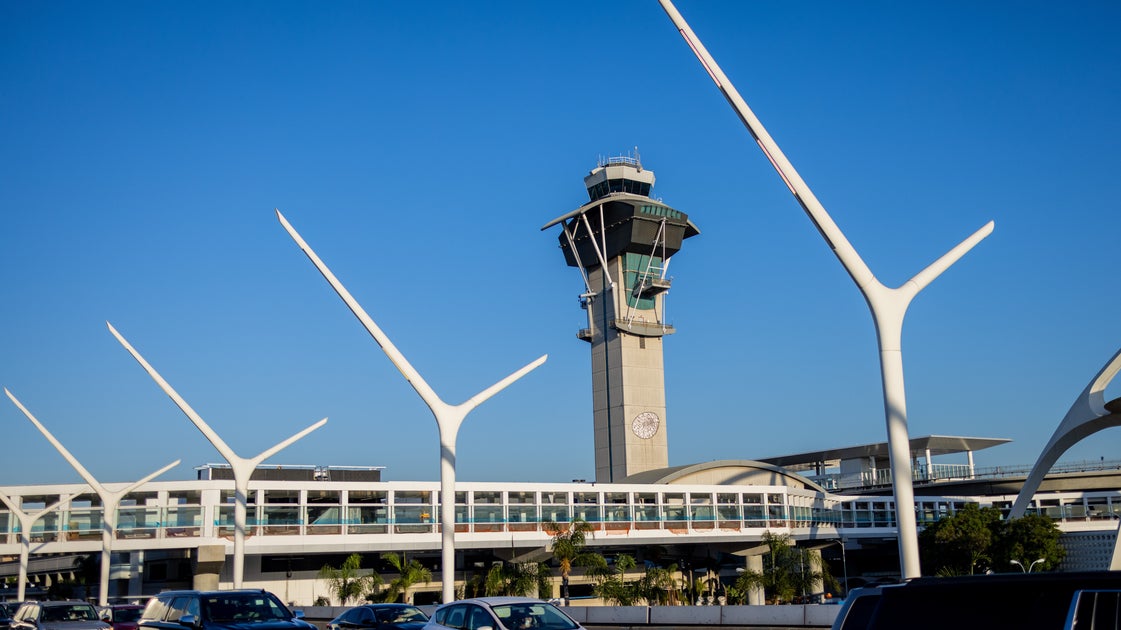
Air traffic controllers at two dozen West Coast airports are having difficulty keeping the windows cleaned on a regular basis, a Federal Aviation Administration employee told the outlet. That’s because DOGE’s overhaul of the payments system the agency uses now requires them to write out statements justifying expenditures like cleaning the windows and shades, ordering pens, maintaining elevators and other necessities.
While the Post reported that many federal employees supported in theory the idea of making government run more efficiently, the DOGE policies were having the opposite effect in practice.
Read more at The Washington Post.
Latest Live Updates

Elizabeth Warren Says 4 'Dangerous' Provisions In GOP Tax Bill Break Senate Rules
Sen. Elizabeth Warren (D-Mass.) launched a new video series targeting four pieces of the GOP’s sweeping tax-and-spending bill that she says violate Senate rules and she’ll fight to strip out.
Republicans are relying on the so-called “budget reconciliation” process to pass their bill, which strips Medicaid coverage from millions of people in order to pay for tax cuts for rich people. Any bill passed through this process has to be explicitly related to budget issues, so if it has other things in it that aren’t related to the budget, they have to come out.
In a series of videos, Warren highlights four “dangerous” provisions tucked into the bill that have nothing to do with the budget: defunding Planned Parenthood, eliminating a tax on gun silencers, banning states from regulating artificial intelligence, and an unconstitutional provision that would stop courts from being able to hold Trump or his administration officials in contempt for ignoring their orders.
“Donald Trump and Republicans are using this bill to push through a backdoor ban on abortion across the entire country, even in states where abortion is protected,” Warren says in the video about the Planned Parenthood language.
“Not only does it have nothing to do with our budget, it would actually cost taxpayers millions of dollars, so this shouldn't even be in the current budget bill,” she says. “I’m going to use every tool I’ve got to try to stop it.”
Trump Delivers Word Salad In Response To Autopen Question
The president pointedly took a question about what he called “the biggest scandal maybe in the last hundred years in this country” — his accusation that former President Joe Biden inappropriately signed documents with an autopen device.
But when asked whether he could point to any specific incidents that amounted to a crime, Trump said he had not.
“No, but I have uncovered the human mind. I was in a debate with the human mind,” Trump told the reporter, apparently referencing the disastrous June debate between himself and Biden that precipitated the former president’s exit from the race.
Trump’s autopen accusation stems from his general attacks on Biden’s apparent cognitive decline. He has suggested that Biden’s staff manipulated an elderly man into wielding his presidential power in ways he otherwise might not, using the autopen to add his signature to official documents. Past presidents have also used autopen devices, however, and there is no evidence that Biden was not aware of his actions as Trump claims.
Trump ordered the Department of Justice to begin a wide-ranging investigation of Biden's autopen use on Wednesday.

Trump Compares Himself To Hockey Referee Who Decided To Let Russia, Ukraine ‘Fight A Little While’
German Chancellor Friedrich Merz and Trump fielded a handful of questions about the war in Ukraine during a bilateral meeting in the Oval Office Thursday, where Trump compared himself to a hockey referee who’s decided to let two players duke it out for a bit.
“Sometimes you see two young children fighting like crazy, they hate each other and they’re fighting in a park. And you try and pull them apart. They don’t want to be pulled — sometimes you’re better off letting them fight for a while,” he said.
“But it’s a pretty known analogy,” he continued. “You have two kids who fight, fight, fight. Sometimes you let them fight a little while. You see it in hockey, you see it in sports. The referee let ‘em go for a couple seconds.”
Asked during a different moment if he had any thoughts, Merz reminded Trump that tomorrow, June 6, is the anniversary of D-Day, “when the Americans once ended the war in Europe.”
“America is, again, in a very strong position to do something [about] ending this war,” he noted.

Trump's Controversial Pardons Make Some Republicans Squirm
WASHINGTON ― President Donald Trump’s pardons of white-collar criminals who support his presidency and donate to his campaigns stoked plenty of outrage from Democrats and former law enforcement officials last week.
Now, even some Republicans are signaling their discomfort with his decisions to grant clemency ― and the way he’s going about it.
Read more here.

Elon Musk Responds To Trump Claims: 'False'
Musk immediately responded to comments Trump made about their relationship and Musk's thoughts on the president's "big, beautiful bill," saying the bill "was never shown to me even once and was passed in the dead of night so fast that almost no one in Congress could even read it!"
Musk has been digging up old posts from Trump about the budget to support his argument against the bill. He's also been sharing clips and comments from members of Congress who have concerns about the legislation.
He also claimed in a series of responses to another X user that "without me, Trump would have lost the election," and lashed out at Trump for his "ingratitude."

Trump Says He’s ‘Disappointed In’ Elon Musk, Unsure If Relationship Will Recover
Trump said he’s “surprised” by Elon Musk’s public criticism of his spending bill, telling reporters: “Elon and I had a great relationship. I don’t know if we will anymore.”
“He knew every aspect of this bill, he knew it better than almost everybody and he never had a problem until right after he left,” Trump said from the White House Thursday.
He added that Musk said “wonderful things about me” when he departed the administration late last month, but that he suspects Musk’s flattery may change.
“He hasn’t said bad about me personally but I’m sure that will be next. But I’m very disappointed in Elon. I helped Elon a lot,” he said.
Musk has launched public attacks on Trump’s so-called “Big Beautiful Bill” since his White House departure, with him most recently urging his millions of social media followers to call members of Congress to “KILL the BILL.”
Chad Stops Issuing Visas To U.S. Citizens In Response To Travel Ban, Digs Trump For Taking Qatari Jet
Chad President Idriss Deby Itno said the country has stopped issuing visas to U.S. citizens in response to Trump’s U.S. travel ban that targets 12 countries, including Chad.
In a statement obtained by Reuters, Itno said the country “has neither planes to offer nor billions of dollars to give,” referring to the $400 million jet Trump accepted from Qatar for his own personal use, “but Chad has its dignity and its pride.”
Other countries subject to full bans on entry are Afghanistan, Myanmar, Republic of the Congo, Equatorial Guinea, Eritrea, Haiti, Iran, Libya, Somalia, Sudan and Yemen. Trump also ordered partial travel bans on people from Burundi, Cuba, Laos, Sierra Leone, Togo, Turkmenistan and Venezuela.
Mike Johnson Says He Will Speak To Elon Musk Soon
House Speaker Mike Johnson said he expects to speak with Elon Musk on Thursday about the billionaire’s online campaign to kill Trump’s tax bill, after Musk labelled it a "disgusting abomination."
Musk has been relentlessly posting on X to encourage voters to call their representatives and demand they vote against the package, which is estimated to add trillions to the national deficit.
“Look, Elon’s a good friend. We texted late last night. We're going to talk this morning,” Johnson told Bloomberg.
The day before, the speaker told reporters that he tried calling Musk but he did not answer the phone, adding, “I hope to talk to him today.”
“We’ve laughed about our differences in policy before,” Johnson said.
Trump Admin Pledged More Than $2 Million To Investigate Whether Diversity Causes Plane Crashes. (It Doesn’t).
According to an exclusive report in The Atlantic on Thursday, the Department of Transportation in March agreed to spend $2.1 million investigating whether or not policies promoting diversity, equity and inclusion cause plane crashes.
The absurd inquiry came about after Trump blamed diverse hiring at the Federal Aviation Administration for a deadly mid-air collision between a passenger airplane and a military helicopter in Washington, D.C., in January.
Air traffic controllers told The Atlantic’s Isaac Stanley Becker that Trump’s bizarre blame game sure looks like a massive waste of taxpayer money.
“Contrary to what Trump may hope, it’s not expected to find that programs aimed at ensuring representation for women and people of color are responsible for this year’s string of aviation disasters,” wrote Becker. “That determination, several air traffic controllers told me, hardly required a multimillion-dollar probe.”