


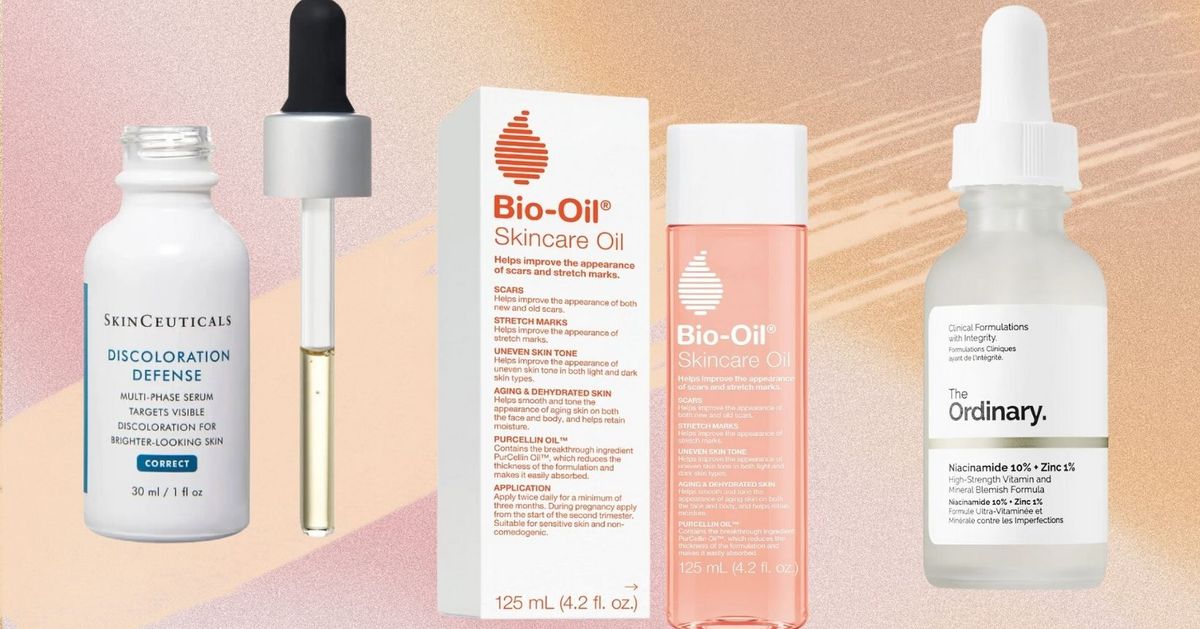

Scars are a normal and important part of the skin’s healing process, but they can also be more noticeable than we would like sometimes, prompting us to search for products that can help them fade or diminish. Depending on the type of scar you’re trying to address, dermatologists say there are over-the-counter solutions that can treat new and existing scars and also prevent them.
As board-certified and New York City-based dermatologist Dr. Blair Murphy-Rose explained, scarring can cause color and textural changes of the skin, resulting in what she refers to as post-inflammatory hypo- or hyper-pigmentation.
Although most scars are flat with the skin on top developing a slightly wrinkled appearance, Murphy-Rose said that there can be different types of scars: hypertrophic, which adopt a raised appearance; atrophic, also called depressed scars, that heal with a sunken appearance; and keloid scars, which develop when extra and darker-looking tissues extend beyond the original injury area.
Dr. Brendan Camp, a board-certified dermatologist also based in New York City, said that blemishes or acne can often leave behind discoloration and hyperpigmentation, but that doesn’t necessarily mean they are a scar.
“While not technically a scar, hyperpigmentation can last for a long time, which might make it seem like a scar,” he said.
Because the formation of scars can depend on a variety of factors —including everything from location to depth and severity of the wound to genetics —addressing their appearance might not always involve the same methods.
“Hypertrophic and keloid scars are more challenging to treat, and often
require in-office treatments. These include injections with corticosteroids and laser treatments to reduce their size and appearance,” Camp said.
Post-inflammamatory hyperpigmentation, on the other hand, can be treated with care, according to Murphy-Rose.
Both experts said that with the consistent use of collagen-boosting skin care actives like retinoids, the textural irregularities from more superficial scars can also be slightly improved, though Murphy-Rose said in-office laser treatments can be a more effective option.
You can explore some of the readily available non-laser skin care options in the list ahead, which includes ingredients and products suggested by these two dermatologists and helpful information from HuffPost’s most recent reporting on scars.

A 1% retinol treatment
We selected this high-strength retinol treatment by trusted skin care brand Paula's Choice for its 1% concentration and the addition of peptides, which can help support a healthy skin barrier and boost collagen production as well. This potent, lightweight and lotion-like serum also contains oat, willow bark and licorice root extracts, all of which can help address redness and skin sensitivity.

A prescription-strength retinoid treatment
Camp previously recommended this prescription-strength retinoid treatment by La Roche-Posay, the French pharmacy staple behind several cult-favorite skin care products. "Marketed as an acne medication, this retinoid was previously available only with a prescription and can be used to treat discoloration," Camp said.

A six-pack of silicone scar patches
These clear scar patches are made 100% medical grade silicone, are water-resistant and are effective for 24 hours.

A brightening niacinamide serum
We chose The Ordinary's niacinamide serum because it's one of the internet's most well-known formulations and a product that I have used and loved for several years. It's affordable and utilizes a high-strength niacinamide concentration to effectively brighten skin tone and reduce the appearance of blemishes.

A cult-favorite skin care oil
"Bio-Oil contains a number of vitamins and botanical extracts to heal and treat the skin on the face and body,” Camp explained, adding that mineral oil, the main ingredient in Bio-Oil’s formulation, can provide an intense level of hydration for parched or damaged skin as well as help to repair and maintain the skin’s barrier function.

A tinted broad spectrum sunscreen
Camp previously suggested this popular tinted and lightweight sunscreen formula by Elta MD that features SPF 46, contains high-purity niacinamide and meets all of Rose's specifications. The silky and fast-absorbing texture layers well underneath makeup and is suitable even for those with sensitive or acne-prone skin.

A multi-tasking clinical night cream

An anti-discoloration serum
She suggested this clinically formulated serum that also contains a synthetically derived acid called HEPES that helps to exfoliate skin. Its hydrating glycerin and anti-inflammatory allantoin can keep skin feeling soothed rather than irritated.

A trusted cocoa butter body cream
According to Camp, moisturizing ingredients like shea butter and cocoa butter can soften and nourish skin affected by atrophic scars such as stretch marks.
This cocoa butter daily lotion is by Palmer's, a brand often associated with reducing the appearance of stretch marks and scarring. The hydrating and skin-softening formula is also bolstered by the addition of vitamin E, a well-loved antioxidant that can help support the skin's natural skin barrier.