



Last Tuesday night, I watched the election results with excitement. James Talarico, a Presbyterian and former seminary student, became Texas’ first Democratic senator in 33 years, and Adam Hamilton, a United Methodist megachurch pastor, became the first Democrat elected to the Senate from Kansas in 94 years.
In Iowa, North Carolina, Kansas and Texas, politicos saw vocal Christians flip red seats blue. It wasn’t just the blue-nami that excited me. It was how many of the newly elected officials were progressive Christians, motivated by their faith to pursue compassion, inclusivity and economic justice.
In other words, they were using their political prowess to answer a familiar question: What would Jesus do?
Plus, they were clawing back MAGA’s monopoly on Christian political identity. It was something I had been waiting to see happen for more than 10 years.
Growing up in the Texas Hill Country, I attended my predominantly white evangelical church whenever the doors were open. Sunday morning service. Sunday evening youth group. Wednesday night Bible study. I spent my summers at church camp. When I graduated from high school, the only college I applied to was a Christian college. I married a churchgoing boy, and we started a churchgoing family.
Everything was going pretty great until Donald Trump came along.
In 2014, my friend’s brother-in-law contracted Ebola while treating patients in Liberia with the Christian nonprofit Samaritan’s Purse. My Facebook feed flooded with prayers for Dr. Kent Brantly’s recovery, and I was relieved when the Obama administration brought him back to the United States for treatment. But Trump went on one of his now-famous Twitter tirades, saying, “People that [sic] go to far away places to help out are great-but must suffer the consequences!”
It was obvious to me that Trump, who at the time was only a media figure, not a politician, had never read Matthew 25:40, which says, “Truly I tell you, whatever you did for one of the least of these brothers and sisters of mine, you did for me.” Helping others is at the core of Jesus’ teachings, and the basis of the Christianity I’d dedicated my life to.
So I felt shocked and betrayed in 2016 when the same Christians I’d prayed with began to coalesce around Trump as a political candidate. He already had a reputation as a corporate con artist, a philanderer, a birther conspiracy theorist and an internet blowhard. And I couldn’t forget how he wanted to leave Dr. Brantly in Liberia to “suffer the consequences.”
Trump wasn’t the whole problem for me. He was only a mirror that reflected that the Christianity I’d built my life around didn’t exist the way I thought it did. I was going to church on Sunday to worship a Jewish rabbi who taught his followers to speak kindly to each other, take care of the poor, heal the sick and honor women. Why were my churchgoing friends voting for Trump, who did the opposite?
These people made it clear they weren’t voting for the lesser of two evils. They were enthusiastic about voting for Trump for president. Many of them donned Make America Great Again hats. Some attended rallies. Many said Trump was like King David in the Bible – a morally flawed leader whom God used to accomplish his purposes. Jerry Falwell Jr. explicitly compared Trump to David, arguing that Trump’s personal conduct did not necessarily disqualify him from being an instrument of God’s will.
Nothing could sway them from supporting him. When Trump told rallygoers to push a Black woman, my Christian friends named her as the problem. When he mocked a disabled reporter, they brushed it off. When news broke that Trump had bragged about grabbing women by the genitals, my Christian friends attributed it to “locker room talk.” Never mind that the Bible says, “Do not let any unwholesome talk come out of your mouths, but only what is helpful for building others up according to their needs, that it may benefit those who listen,” and makes no exception for locker rooms.
I watched helplessly as the majority of my Christian friends and family voted for Trump. More than 80% of white evangelical Christians supported him in 2016 (and even larger percentages in 2020 and 2024). They have been among his most reliable voting blocs.
In those early days of Trumpism, Christianity in America started to look like something I didn’t recognize. Shouldn’t the people who call this country a Christian nation want to do things that at least vaguely resemble Christ? I became skeptical of the people I sat beside in church. Then I became cynical. Then I stopped going altogether. I began to consider time alone in nature a better form of worship.
On long walks in the woods, I wondered, where are the Christians who speak eloquently about how their faith guides them to support free school lunches, affordable childcare and accessible healthcare? Where are the Christians who want to welcome the immigrants – as the Bible says to do – instead of deporting them? Where are the Christians who don’t want to use the Bible as a bludgeon, but as a balm?
As I processed the results of the 2016 election, I struggled to find my political place. My faith compelled me to become more involved in politics as an antidote to this new type of MAGA Christianity of divisiveness and dishonesty.
Democrats had no shortage of devout Christians among their leaders. Barack Obama, Hillary Clinton and Joe Biden all spoke publicly about their faith. But too often, their religious convictions seemed secondary to their political identities, while Republicans successfully convinced millions of Americans that Christianity itself was a conservative political affiliation.
This gave Republicans a foothold to claim religious superiority in the political sphere. They used Christian symbols – like the cross former White House press secretary Karoline Leavitt wore around her neck – as props to affirm their Christian identity while acting the opposite of how Christ instructed.
But things finally began to shift in the past year or so.

First, Trump overextended his Christian supporters’ benefit of the doubt. In April 2026, he posted an AI-generated image depicting himself as Jesus, an act so blasphemous it sparked widespread bipartisan backlash. Daily Wire podcaster Michael Knowles summed it up: “...The post is sacrilegious. It just is. It’s just inescapable. It’s just a sacrilegious post.”
Then, Trump couldn’t outrun his betrayals. Many Christians I knew who thought Trump was only going to go after immigrants with criminal records were alarmed when ICE began to snatch away their neighbors and friends. Instead of fixing the economy, the prices for groceries and gas skyrocketed. After promising to rein in conflicts in the Middle East, Trump started a war with Iran that is costing taxpayers billions of dollars – and costing service members their lives.
Amid Trump’s broken promises, progressive Christians like Talarico and Hamilton were patiently painting a different vision of Christlike politics: one where people “act justly and to love mercy and to walk humbly,” as Christians are commanded in Micah 6:8.
On the campaign trail, Talarico invoked Jesus’ command to “love your neighbor as yourself” and talked about lowering prescription drug costs and making life easier for working families. Hamilton, the pastor of an affirming church who encourages his supporters to look for the inherent dignity in everyone, has fought for LGBTQ+ inclusion, reproductive freedom and political unity.
Progressive Christians believe the U.S. thrives when people are offered a fair shot, when we invest in healthy families, when we have strong public schools, when healthcare is affordable and housing is accessible, when our economy rewards hard work instead of concentrating wealth at the top. Most importantly, progressive Christians believe God’s willingness to use imperfect people does not mean their actions are beyond accountability or critique.
I’m not sure if I’m ready to go back to church yet, but something in me healed Tuesday night as I watched the Christian blue wave roll in.
Christianity doesn’t belong to one political party or one social movement. We all get to decide for ourselves how our political decisions best reflect Matthew 25:40.
And progressive Christians’ wins didn’t restore my faith in God. I never lost that. But they did restore my belief that some Christians can better represent Christ in political life than the MAGA version. It took far too long, but that change feels nothing short of miraculous.
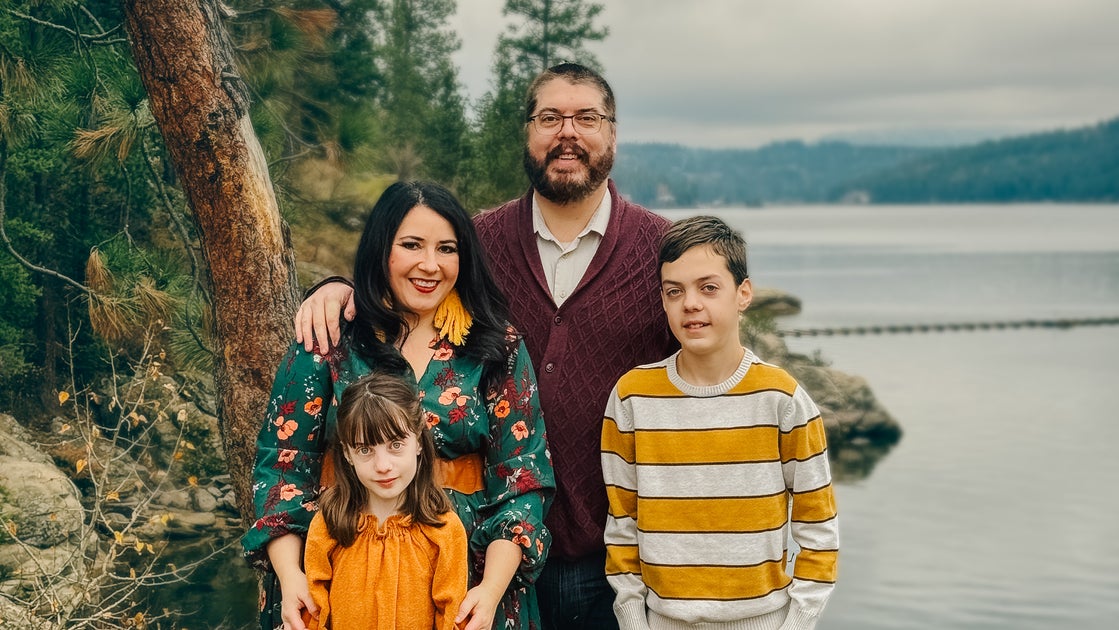
Tiffany Torres Williams writes about the dangerous intersection of Christian nationalism and politics in her newsletter Modern Jezebel. She lives in Western Montana with her husband, son, and daughter.
Do you have a compelling personal story you’d like to see published on HuffPost? Find out what we’re looking for here and send us a pitch at pitch@huffpost.com.