


One of the pilots on the private Learjet that crashed into the ground in South Florida on Sunday, killing all nine people aboard, has been identified by her family as a 20-year-old aviator who got her pilot’s license while still in high school.
Nathalia Gadelha Filgueiras was co-piloting the Learjet 60, her mother told The New York Post and The New York Times, when it abruptly plunged from the sky on Sunday afternoon while traveling from Austin, Texas, to the Bahamas.
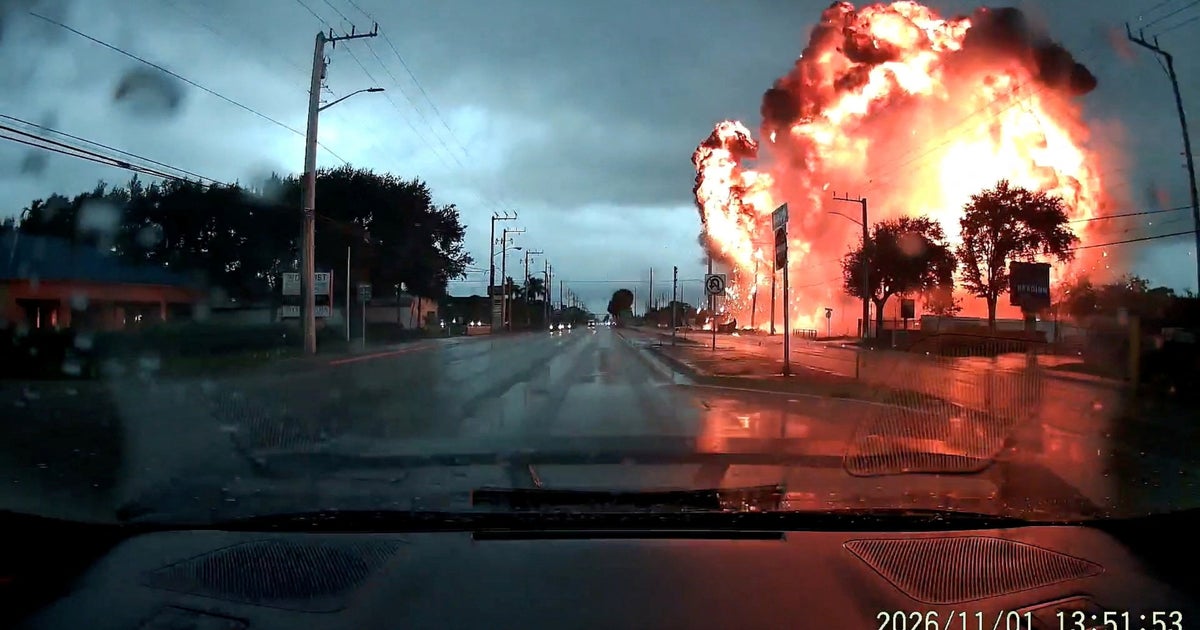
Video captured a massive fireball erupting near a neighborhood after the plane slammed into the ground, leaving a crater in a road.
“I wanted her to live her dream, but I knew that her dream was going to be the thing that would take her away from me,” her mother, Camila, told the Post.

Seconds before the crash, audio released by the air traffic control-recording website, LiveATC.net, appears to capture a female pilot calmly reporting moderate turbulence and ice accumulating on the aircraft, with the outside temperature reaching -47 degrees Celsius.
The pilot’s calls then grew increasingly urgent and frantic, with the plane at one point said to be plunging 20,000 feet per minute at a 60-degree angle.
“We’re going to crash into the ground!” the pilot shouts shortly before contact ends.

Though it remains unclear what happened, the freezing weather in the sky and “moderate” turbulence reported to Air Traffic Control are “certainly a factor” in the crash and part of the investigation, an official with the National Transportation Safety Board told reporters on Monday.
“We do have some evidence that there was some breakup of the aircraft before impact; we are still seeking to determine that,” NTSB Member Tom Chapman said at an afternoon press conference. “We may find parts of the aircraft some distance away from the impact site.”
A senior NTSB investigator said the investigation into the tragedy remains in its early stages, with officials expecting a “several-day process” working at the scene.

Chapman added that while there’s some early indication that a cockpit voice recorder, a component of the aircraft’s so-called “black box,” was installed on the plane at some time, it may not have been on board at the time of the crash. Regardless, he assured that his team can do “some incredible detective work” without it.
Filgueiras’ stepfather, Thiago Corteleti, told the Post that she had 1,300 hours of flying experience and that she texted her boyfriend just 10 minutes before the collision.
“She just said, ‘I’ve got turbulence, I’ve got ice,’” Corteleti said.

Filgueiras’ mother told the outlet that her daughter had been working as a commercial pilot for the last nine months and that she didn’t know who the second pilot on the plane was. According to online records with the Federal Aviation Administration (FAA), Filgueiras received her commercial pilot’s license in March and her flight instructor certificate in February of last year.
In a separate interview with The Times, Filgueiras’ mother said her daughter worked for private aviation company Upper Jets in Fort Lauderdale, Florida. HuffPost’s attempts to reach the company for comment on Monday were not immediately successful.

NASA administrator Jared Isaacman, while citing his own aviation experience, urged the public on Monday not to rush to judgment in the crash and said that despite the pilot’s young age, “she would still have the appropriate training, qualifications, and checkouts by an FAA examiner or designee.”
“The charter industry routinely hires commercial pilots very early in their careers to gain experience alongside an [Airline Transport Pilot]-qualified captain before they move up to the airlines,” he said in an online post.