


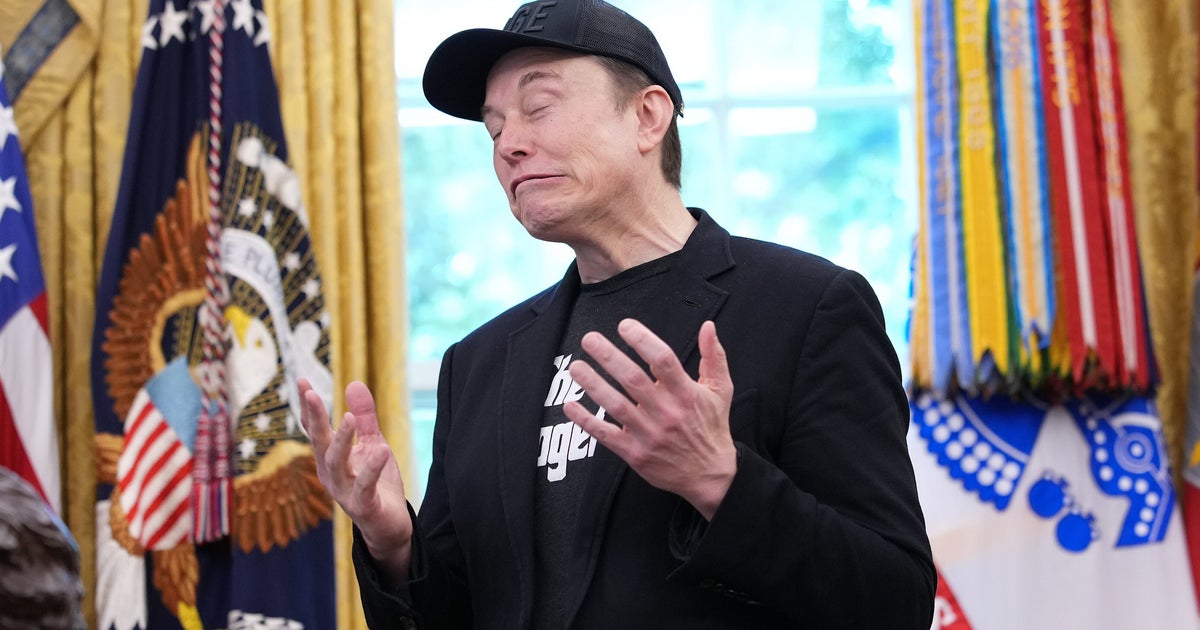

Elon Musk does not keep his feelings to himself.
Last week, Musk had a social media meltdown as he posted through his breakup on X with his once-close ally President Donald Trump, insulting Trump’s “disgusting” policy bill, his “ingratitude,” and his fitness for office in real-time by sharing, reposting or replying about one post every three minutes for three hours on Thursday afternoon.
It was an extraordinary public escalation from someone who once called himself Trump’s “first buddy,” but going through daily chaotic bursts of posting is normal for Musk. Musk is the world’s richest man who is also the CEO of four companies, but he finds time to regularly fire off dozens of posts on X, the platform he owns.
HuffPost is here to uncover the real impact of Trump’s administration on the economy and everyday lives. Support journalism that holds power accountable. Join our membership program today.
When Musk lashes out online, his words can tank financial markets, a unique kind of power. Tesla’s stock plunged 14% on Thursday, its biggest decline in almost three months, following Musk’s public fight against Trump. But the behavior of airing grievances online in real-time for all to see is not unique to just Musk.
“Lots of people ‘post through it’ beyond public figures,” said Ysabel Gerrard, a senior lecturer in digital media at the University of Sheffield. “What’s so deeply fascinating about Elon’s behaviors ― and what makes them quite unique ― is that they have serious political ramifications but also resonate with us, as we all follow people who are ‘extremely online.’”
We don’t know exactly why Musk posted so much real-time criticism against Trump last week, but there are common reasons as for what compels people to post constantly.
For Frequent Posters, Social Validation Is One Common Reason
Stanford University psychiatrist Dr. Anna Lembke said she doesn’t know what is going through Musk’s head, but frequent posters in general typically do so out of a desire for social validation, which can be even more potent to receive from people you don’t know.
Lembke said social validation from millions of strangers online can be “much more potent and therefore more reinforcing than the social validation we might get from people in our real life, because of the emotional complexity of real-life relationships where there’s much more give and take, and we have listen.”
“And that’s not necessarily true on social media, where we can just delete or block somebody or go somewhere else to get the reinforcement we’re looking for,” she continued.
Experts say one other reason for posting so much could be to control narratives against you. A New York Times report alleges that tensions between Trump and Musk had been simmering for months, but the breakup got accelerated after Musk felt “humiliated” when Trump got rid of Musk’s preferred pick for head of NASA.
”[Musk] wants to be validated. This was not the way it was supposed to go. He was supposed to save the country from all kinds of things. And he was the only guy who could do it,” suggested Tracy Ross, a couples therapist, about what Musk might be seeking with his frequent posts. “Think of the specialness of that, and then to lose that, he’s got to feel gutted.“
Ross said in her practice it can be typical for couples to engage in a blame game after a breakup. Instead of reflecting on “How am I responsible for this blow up?” people can discharge those feelings by seeking constant validation online so they “don’t have to feel those things and [they] don’t have to look at [their] own contribution” in the breakup, Ross said.
And one way to control a narrative about your reputation is to share nonstop posts about it.
“Whoever can post the most and get the most reposts, the most followers and likes, then they at least have the feeling that they’re shaping and dominating the historical narrative around what happened,” Lembke said about why people might post so much.
To be clear though, posting a lot is not a wholly negative behavior and can sometimes be out of “a desire for social connection and the possibilities of career enhancement,” Gerrard said.
It’s also a behavior that social media platforms encourage, Gerrard said.
“X has historically cultivated a following of frequent posters, which isn’t an accident as it’s precisely what the platform was intended for,” Gerrard said. “Whereas those posting through it on other platforms may face more criticism. Instagram, for example, is largely viewed as a space for highly curated, aestheticized, and potentially inauthentic content, hence the phrase ‘highlight reel.’”
But even big-time posters can reach a limit with how much they should share online.
Musk appears to have deleted his most inflammatory insults against Trump, including his claims that Trump appears in unreleased files related to the late sex offender Jeffrey Epstein and his support for the president’s impeachment.
Ross said that deleting certain insults could potentially be an “admission that maybe he thinks he went too far, and that ... could backfire because Trump is known to be pretty vengeful.”
On Saturday, Trump threatened “very serious consequences” against Musk, the Republican Party’s most important megadonor, if Musk were to fund Democrats.
Although Musk is currently posting in favor of the Trump administration’s immigration policies, he has not backed down from all of his criticisms. The one word neither men have publicly said in their ongoing spat is “sorry.” Despite appearing to delete some of his posts against Trump, Musk has left up posts about his influence on Trump’s reelection, suggesting the feud is far from over.
Typically, the fallout after a breakup can mean losing friends or clothes. But in this case, it could potentially be the difference between winning or losing an election or a government contract.
Having the richest man in the world post through his breakup with the President of the United States may not make for stable governance or financial markets, but it does make for a rapt online audience as we all wait for what either man will post next.