


At 29, I’m cusp Gen Z. Here’s what that looks like in broad strokes: In elementary school, I just barely grasped the implications of the financial crisis of 2008, four years after my family immigrated to Texas. When I was a sophomore in college, I witnessed the jarring rise of the far right in the U.S. Then Trump was elected president in 2016 and the pandemic began in 2020, less than a year after I graduated college.
I now live in New York City, where the cost of living has increased by about 40% since I arrived in 2015, according to the Bureau of Labor Statistics. While some of us struggle to find jobs with salaries that offer a living wage, Elon Musk became the world’s first trillionaire. It’s safe to say that these events contributed to my overall cynicism about my own future.
For years, I’ve had the sense that we’re living inside a pressure valve, and that there was a huge gap between the future we were told we would have and the material reality many people our age were experiencing. It feels like that valve is about to burst. And clearly, I’m not the only one who feels like the systems that were supposed to help us have failed us spectacularly.
Across the world, young people are taking to the streets to protest everything from the skyrocketing cost of living to government corruption and what they see as increasingly corrupt institutions. Although the specific details of every protest are different, the overall sentiment is actually pretty similar: Gen Z is getting tired of being told to accept a future that looks more and more like it’s low-key trying to exclude us from it.
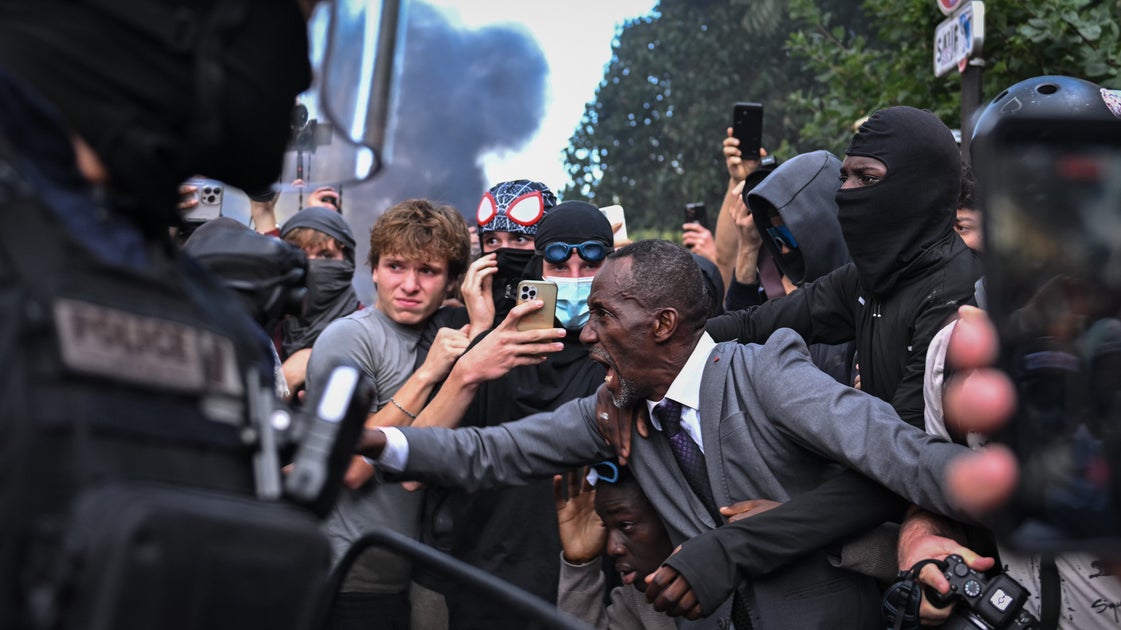
Among the most visible examples right now are the protests in France. The unrest began with student protests over deteriorating conditions in schools and concerns over cuts to public services, and they quickly evolved into a larger movement against the rising cost of living and growing economic insecurity.
Although most protests have been peaceful, others have gotten more intense, with curfews being imposed in some areas of the country. In the Parisian suburb of Saint-Denis, the city’s mayor, Bally Bagayoko, made himself a human shield to protect young protestors from riot police. The scenes out of France are dramatic, and they are a physical manifestation of the frustration and hopelessness that so many young French people of all backgrounds are feeling right now.
In Spain, massive protests against the housing crisis have also been taking place. They intensified after an 87-year-old woman, María del Carmen “Maricarmen” Abascal, was evicted from her home after an investment fund tried to increase her rent by 230%. Protesters reportedly tried to stop police officers from carrying her out of her apartment in a stretcher, and she became a symbol of a housing crisis that has made living in many of Spain’s major cities unaffordable. Thousands rallied in her support, but she died earlier this month in the hospital.
In India, the youth-led “Cockroach” movement — a self-given nickname that stems from how some politicians see young unemployed residents as parasites — has been demanding the resignation of the country’s Chief Election Commissioner Gyanesh Kumar over changes to voter rolls that many say have disproportionately affected marginalized communities and benefited Prime Minister Narendra Modi’s conservative ruling party.
The protests, organized in part by the Cockroach Janta Party, have led to mass detentions and a heavy police presence in New Delhi. The power and effectiveness of these protests is unprecedented; this past July, there were weeks of relentless, fierce demonstrations around leaked exams that ruined thousands of young lives — and the Minister of Education Dharmendra Pradhan resigned.
Then there’s Latin America, where several countries have experienced a shift toward right-wing leaders and movements, many of them sympathetic to Trump and Israel’s right-wing governments. Ultra-conservative leaders have risen power across Colombia and Peru in elections earlier this year. Right now in Brazil, Flávio Bolsonaro, the son of former President Jair Bolsonaro, has a real shot at winning the presidential runoff against Luiz Inácio Lula da Silva this Sunday.
Meanwhile, internal communications that were reported by Brazilian media suggest that Meta’s platforms suppressed some of Lula’s accounts and content while pushing Bolsonaro’s accounts at the same time during elections.
Although Meta has publicly denied allegations of favoring one candidate over another, the controversy has raised questions about the power that a handful of tech companies have over the information voters are exposed to, and given some young people in the region a sense that the corporate interests are dictating their futures. In response, thousands of Brazilians have been protesting in the streets and in front of Meta offices ahead of the elections. Some have also launched digital counter-campaigns to attempt to fight misinformation.
While these are just a few of the Gen Z-led movements demanding rights around a few of many issues, they speak to a broader phenomenon: that across cultures, people are increasingly losing faith in long-held systems of patriarchy, classism, white supremacy.
Many of us feel like the people in power are creating a future without our input, and it’s not a future many of us want to be a part of.
Now the question is whether those leaders are actually listening, or whether they’ll continue to ignore what our generation is trying to tell them.
I feel as though we’re witnessing the beginnings of a global movement that’s far from over, led by informed young people. And the following generations will be even harder to ignore ― and that’s a great thing.