


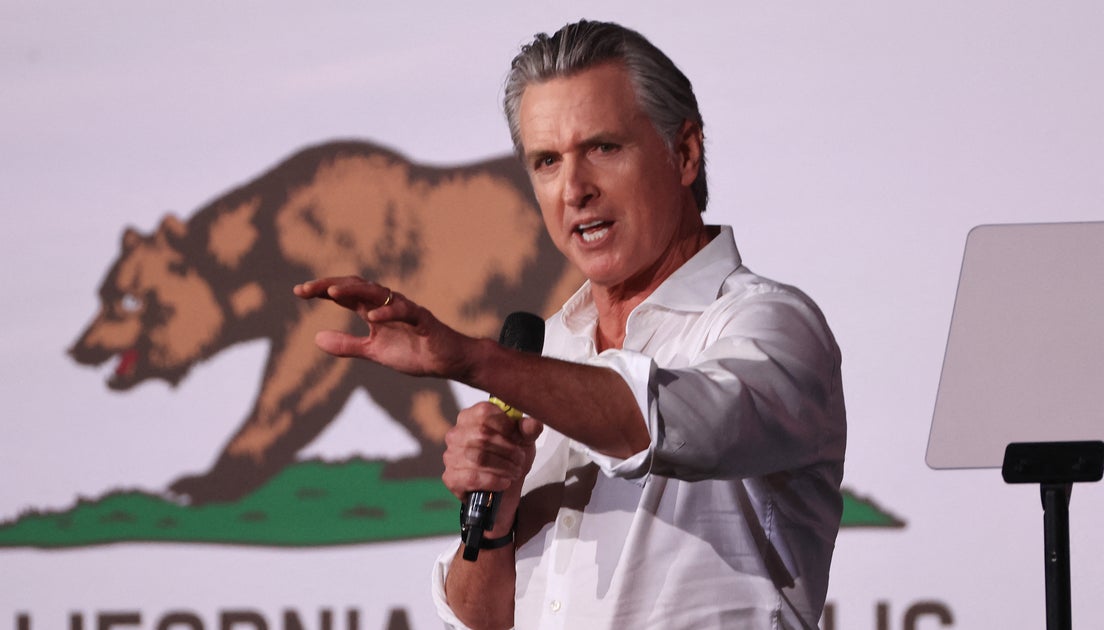
In one of his final acts as California’s governor, Gavin Newsom announced Thursday he would commute the sentences of more than 500 people awaiting the death penalty in the state.
In an open letter to California residents, Newsom said he was sparing the lives of all 548 people sentenced to death because he believes “the state cannot morally kill them.”
“By every measure, California’s system for administering the death penalty is a failure,” he wrote. “It has not been and cannot be fairly applied and has resulted in the conviction of innocent people.”
However, California law requires at least half of Newsom’s clemency grants to be approved by the state’s Supreme Court because the cases involve an offender convicted of more than one felony. While clemency refusals in the state are rare, the court has done it on occasion.
Those granted clemency will now serve life sentences without the possibility of parole, Newsom said.
“We can now let these offenders die in obscurity while we forever remember and honor their victims,” his letter continued.
Since his election in 2019, Newsom has been an outspoken critic of California’s death penalty. He issued an indefinite moratorium on the death penalty shortly after taking office, which didn’t alter the outcome of any cases but temporarily suspended the practice for months. Still, the last time California carried out an execution was 2006.
Newsom noted that the death penalty disproportionately targets people of color, people with mental illnesses and poor people, and results in the execution of those who have been wrongfully convicted ― something backed up by a previous warning from United Nations human rights experts and research from the Equal Justice Initiative. HuffPost has reported on many of those instances.
Newsom’s move comes shortly after the botched attempt to execute Tennessee death row inmate Christa Pike, an ordeal that shed light on how horribly wrong death sentences can go and revived calls for a moratorium on executions across the country.
Some family members of victims and others in California denounced Newsom’s commutations as a soft-on-crime approach. Former Sacramento District Attorney Anne Marie Schubert, who now leads the Criminal Justice Legal Foundation, told The New York Times she would sue to block Newsom’s decision.
Newsom acknowledged in his letter that the decision would likely pain and anger some people, but that he ultimately believed it was the right decision.
“This will always weigh heavily on me,” he wrote. “As Governor, I alone bear responsibility for this decision and its impact, just as I alone would bear responsibility for each execution.”