


At last, fall is here and a lot of our favorite TV shows are back on network, cable and streaming platforms.
In September, long-running network series “Dancing With the Stars,” “Survivor,” “The Voice,” the “Law & Order” franchise and “The Simpsons” all aired new episodes. This month, fan favorite series like “Matlock,” “Abbott Elementary,” “9-1-1” and “NCIS” make their debuts.
Just eight brand-new shows are making their premieres this fall on network television: Fox has two reality television competitions, “Celebrity Weakest Link” and “99 To Beat”; NBC and ABC are only debuting two new series, “On Brand With Jimmy Fallon” and “9-1-1: Nashville,” respectively. CBS has four new series: workplace comedy “DMV,” music competition show “The Road” and the police procedurals “Boston Blue” and “Sheriff Country.”
But of course, the streamers are packing out their lineups. Netflix debuted crime thriller “Black Rabbit” and mystery limited series “Wayward”; Hulu is expanding its true crime drama portfolio with “Murdaugh: Death in the Family.” Peacock is lending “The Paper,” its new spinoff of “The Office,” to NBC’s lineup. Paramount+ is continuing its collaboration with Taylor Sheridan for his addictive series “Tulsa King,” “Landman” and “Mayor of Kingstown.”
If you’re more into film, Hollywood has some big talkers in theaters and on streaming, including “One Battle After Another,” “Wicked: For Good,” Hulu’s remake of “The Hand That Rocks the Cradle” and Netflix’s “Frankenstein.”
HuffPost is keeping an eye on all the new releases this fall and into the top of 2026, when several networks will be launching a jam-packed midwinter lineup and when awards season really ramps up for the hottest cinema of the year.
We’ll recommend what to watch, tell you what to skip and blab on about our favorite scenes and performances. Stay tuned for updates.

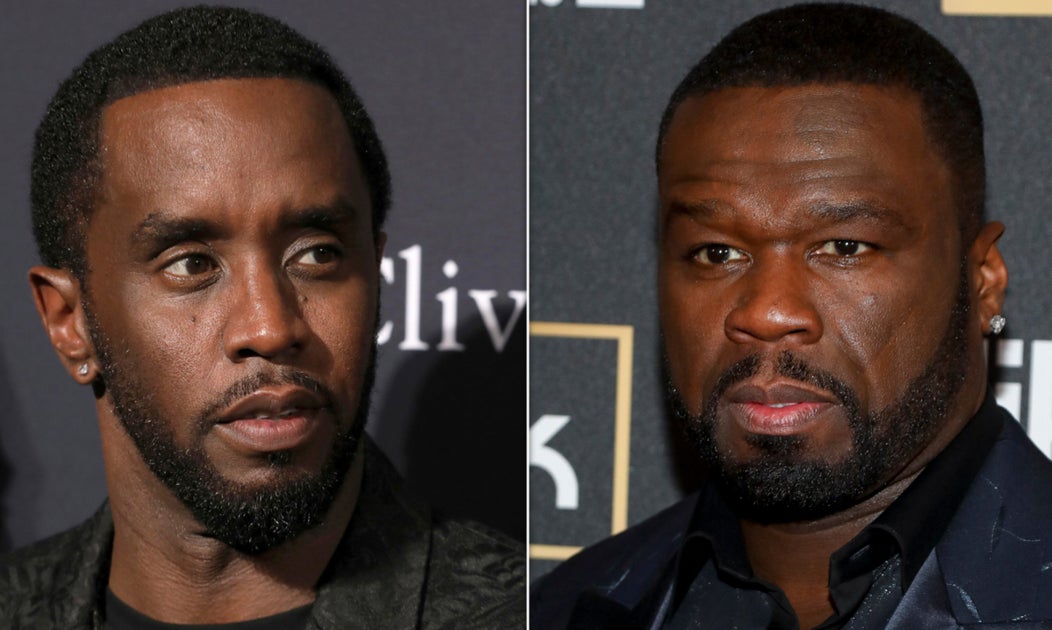
50 Cent Vowed To Make A Documentary About Diddy’s Sexual Misconduct Allegations — And Netflix Just Released The Trailer
Sean "Diddy" Combs' reckoning is here — the documentary, that is.
The trailer for Netflix's highly anticipated docuseries about the fallen mogul, executive-produced by 50 Cent and directed by Alexandria Stapleton, has finally arrived, offering a "staggering examination" of the disgraced music legend and now convicted offender, according to its synopsis.
The four-part series will chronicle the rise and fall of Combs in regard to his many allegations, with never-before-seen materials — including footage of Combs days before his 2024 arrest and indictment — and interviews with individuals formerly part of his circle.
The forthcoming Netflix series follows a string of other documentaries in which Combs has been the subject recently. However, it's expected to offer new insights following the disgraced star's high-profile trial this summer, which resulted in a conviction and a 50-month prison sentence he's currently serving.
"Sean Combs: The Reckoning" premieres Dec. 2. Watch the trailer below.
Latest Live Updates

‘Black Is Beautiful’ Shares The Untold Story Of 1 Man’s Empowering Self-Love Mission
The cost of history left untold is not that it’s forgotten, but that it simply remains unknown. That notion is what planted the seed for director Yemi Bamiro’s “Black is Beautiful,” a noteworthy documentary that shares the little-known story of activist and trailblazing Harlem photographer Kwame Brathwaite.
As the 99-minute film lays plain, few people knew the extent of Brathwaite’s incomparable legacy and the lengths the photographer, who died in 2023, went to use his art to change the world’s perception of Black beauty, traveling to places like Africa to foster solidarity and spread his activism across the diaspora. According to the doc, at one point, you could hardly find traces of Brathwaite’s name on Google, or extensive information about his cultural contributions. However, through interviews with his children, family, collaborators and celebrities like Alicia Keys, Swizz Beatz, Gabrielle Union and Jesse Williams (all collectors of his work), “Black is Beautiful” honors an underreported tale of a man who dedicated his life’s work to celebrating Black pride and joy, openly and unapologetically, during the contentious Civil Rights Era.
“I love that he chose to show us happy,” Beatz remarks of the photographer at one point in the doc. “And that might be a reason why his name is not as big, because a lot of people like to collect our pain as trophies."
Perhaps that is why Brathwaite’s impact went unacknowledged in mainstream media for so long. As the film reveals, the photographer was so protective of his archive that even his adult children were unaware of all his incredible work until they coursed through a treasure trove of negatives of all sorts of entertainment icons: Spike Lee, Lauryn Hill, Oprah Winfrey, Stevie Wonder, a young Janet Jackson. The list goes on.
But that lost history wasn’t always accessible to the general public. Hence, Brathwaite’s son, Kwame Brathwaite Jr., took it upon himself to, with a camera in hand, ask his father to tell his own story, per archival footage seen in the film. In it, the photographer shares one of the reasons he chose to pick up a camera in the first place — the gruesome published photo of Emmett Till’s murder — and how a love for jazz inspired him and his brother, Elombe, to form a social club called the African Jazz Art Society & Studio in 1956. It’s these moments that help color in Brathwaite’s story throughout the doc where talking heads can’t always do it justice.
I, too, was unfamiliar with Brathwaite’s story until I watched Bamiro’s film and experienced a slice of the photographer’s 70-year career, during which he took over 500,000 photographs that captured the splendor of African-American life. Although the documentary feels like only a preview of Brathwaite’s brimful life, it’s packed with all sorts of fascinating facts and stories about the photographer and the Black is Beautiful movement that weren’t even included in D.C.’s National Museum of African American History and Culture upon its 2016 opening, until Brathwaite’s family suggested an update.
For instance, did you know Brathwaite is the man who helped popularize the now-famous phrase “Black is Beautiful”? Or that he co-founded a pioneering Harlem troupe of young Black women called the Grandassa Models, who helped challenge eurocentric beauty standards in the ‘60s? Or even that he served as a house photographer for the renowned Apollo Theater for roughly 15 to 20 years, snapping original performance photos of legends like James Brown, The Supremes and Marvin Gaye?
Imagine my surprise hearing that a Black man from Harlem had such unprecedented access that he was scooping established publications back then as a photojournalist for Blues & Soul magazine. Or that he pulled off miracles by traveling to Africa with the Jackson 5, and photographing Muhammad Ali alone before his Rumble in the Jungle fight against George Foreman in 1974 when virtually no one else could.
Brathwaite’s rich story is too incredible to not have had a bigger spotlight on it before the late 2010s and Bamiro’s film. What he did with Black is Beautiful alone, amplifying a self-love movement in the 1960s that has left a lasting impact, is nothing short of revolutionary.
Sadly, “Black is Beautiful” isn’t currently available to stream wide. However, for those who were lucky enough to catch its 2025 BFI London Film Festival debut or DOC NYC premiere this fall, you got quite a historic treat. Until the film (hopefully) makes it way to a streaming platform, I’d suggest purchasing Brathwaite’s “Black is Beautiful” book to get a better sense of his remarkable career.

‘Marty Supreme’ Sees A Manic Timothée Chalamet Go Completely Off The Rails
Timothée Chalamet has been selling performances ever since his breakthrough turn in 2017’s “Call Me by Your Name.” Whether they’ve been true standouts (“Dune”) or less than stellar (“A Complete Unknown”), the 29-year-old actor, even still at what feels like early on in his career, has been eager to reach the heights of undeniable critical acclaim as a serious movie star.
Chalamet said as much in his now-famous SAG Awards acceptance speech earlier this year, in which he proclaimed that he was “in pursuit of greatness,” evoking the names of “greats” like Viola Davis, Marlon Brando and Daniel Day-Lewis.
That may very well be Chalamet’s outlook on his accomplished film profile. He also could’ve been emulating his over-confident character Marty Mauser from his latest big-screen offering, “Marty Supreme,” the frenzied, 1950s-set pingpong affair from “Uncut Gems” co-director Josh Safdie, which hits theaters Christmas Day. In it, Chalamet plays an egotistical, entitled and pretty charming young man, who, like the actor’s speech, goes through hell and high water “in pursuit of greatness” as a pingpong prodigy, so the movie’s vague synopsis says. That description eventually becomes clear over the movie’s extensive 149-minute runtime, though.
Chalamet is on record hyping up what he considers a career-best performance in the film. And while that’s still debatable, I will admit that he’s quite a spectacle in this absolutely unhinged epic (it certainly gives “Uncut Gems” a run for its money) that goes completely off the rails, as we soon learn just how far Chalamet’s Marty is willing to go to achieve said greatness.
Let me paint the picture.
Marty Mauser doesn’t necessarily need a championship title to confirm that he’s the greatest table tennis player in the world. The New Yorker knows that. He gloats about that. And takes every opportunity he can to remind anyone who will listen that he was born to be excellent at the sport. Still, that doesn’t stop the narcissistic young man from relentlessly pursuing his dream at any and all costs to his morals and reputation, even when it seems like the universe is doing its damnedest to prevent it from happening.
That premise fuels the unbridled momentum of “Marty Supreme,” a story that begins as a portrait of an impassioned dreamer and gradually shifts into a cautionary tale about the cost of failure, which Safdie co-wrote with longtime collaborator Ronald Bronstein. As the story follows Marty on several dummy missions, that throughline gets a bit muddled at times. Frankly, the film would have benefited from trimming down a handful of scenes to tighten up what becomes less a sports movie and more a compelling character study.
Much of that impact stems from Chalamet’s portrayal of his fast-talking, endlessly persuasive character who’s always buzzing with energy, even when doing something as simple as selling shoes in his uncle’s tiny store on the Lower East Side of Manhattan. Of course, that’s not what Marty wants to spend his days doing. He’d rather hustle at an underground table tennis club or, better yet, play in an international tournament so his skills can finally be recognized on a global scale. But in post-war America, respect for the sport is scarce, even for a gifted player like Marty.
But as mentioned, nothing and no one can stand in his way when greatness is on the line. Not even Marty’s heavily pregnant (and married) girlfriend, Rachel (another standout role for “I Love L.A.” star Odessa A’zion), or his overbearing mother (Fran Drescher), or his boss/uncle (Larry Ratso Sloman), who’d rather see him stay on as manager of his store than chase a futile dream. Marty will con whoever he needs to — including a Hollywood starlet (a big-screen return for Gwyneth Paltrow) and her hard-ass, wealthy mogul husband (“Shark Tank” judge Kevin O’Leary) — and force a rematch with his fiercest competitor (Koto Kawaguchi) just to make his ambitions a reality.
That’s the nature of Marty Mauser and, in essence, “Marty Supreme,” and what makes the film such a chaos-fueled adventure from start to finish.
There are several scenes I think of off the top that capture that maddening energy, one involving Tyler Okonma, aka rapper Tyler, the Creator, in his impressive film debut, where he plays Marty’s cab-driving partner-in-crime Wally. Without saying too much, just know the scene involves another table tennis scam, an angry mob, a runaway dog and a hasty escape from a gas station fire. Chaotic, right?
But seriously, I wouldn’t mind seeing Okonma in more acting roles after this performance. A’zion is equally riveting in her supporting role, to which she still manages to bring a spark by going toe-to-toe with Chalamet’s Marty, and even outsmarting him in one memorable instance.
But make no mistake, the most convincing performance in “Marty Supreme” belongs to Chalamet. And deservedly so, because even though he’s obviously selling us hard on this joyride of a star turn, compared to others, this one is actually worth buying.
“Marty Supreme” is in theaters on Christmas.

‘Jay Kelly’ Is A George Clooney Movie, But Adam Sandler Steals The Show
Who better to star in a meta-fiction film about the perils of fame than A-list movie star George Clooney?
In a way, charismatic Clooney is the perfect actor to lead Noah Baumbach’s “Jay Kelly,” a sentimental drama about an aging screen star who embarks on a sweeping European expedition to solve his personality crisis. In the film, the charming titular character, like the man who portrays him, has reached the highest heights in his industry, but he’s feeling rather low about the fact that the only thing he has to show of his accomplished life is a bountiful filmography that’s made him beloved around the world ("All my memories are movies,” he says).
The same can’t be said about Jay's personal life, though. He’s distant from his two grown daughters, Jessica (Riley Keough) and Daisy (Grace Edwards), after prioritizing work for so many years, and his closest friends are those on his payroll — including his longtime manager, Ron (Adam Sandler), and publicist, Liz (Laura Dern). The exception is Jay’s mentor, Peter Schneider (Jim Broadbent), whose funeral brings an old friend back into his life: his former acting bud, Timothy (played by a very good Billy Crudup), who still holds a grudge over Jay seemingly stealing his big break and a life of stardom.
A fateful confrontation between the two sends Jay spiraling about the choices he’s made in his life. His solution? Why an extremely last-minute trip to Italy to find his daughter and accept a tribute he previously turned down from a film festival. Never mind the new movie he already agreed to shoot, which Ron pulled so many strings for. The latter and Liz then join Jay’s trip against their will to keep an eye on him, but, of course, that doesn’t go according to plan.
The rest of the movie follows Jay’s aimless travels — which involve an adventurous train ride to Tuscany (and a headline-making hero moment after he stops a purse robbery), rumors of a shocking street fight (which almost leads to a lawsuit) and some surreal soul-searching in the woods — though it’s not as compelling as the movie wants you to think. In fact, as cathartic as Jay’s journey to self-discovery sounds, it’s a bit too buttoned-up to make its emotional weight feel believable.
Sure, there are flashbacks to a disgruntled Jay dismissing Jessica during a surprise therapy session, which help explain their estranged relationship and why the movie star so desperately wants to fix it (even if his solution is flying his daughter out to watch him accept a tribute that reminds her of his absence). And there’s something slightly heartbreaking about him wanting to cherish his last summer with Daisy before she’s off to college, even when she’d rather country hop with her beau.
But even with all those revelations, “Jay Kelly” isn’t a splendid movie because of Jay’s physical and emotional voyage. What ultimately saves the movie is Sandler, delivering another career-best performance as the exhausted and overworked Ron, who has busted his ass for years for Jay with very little reward.
In many ways, his journey in the movie parallels Jay’s, as he, too, often leaves his family behind for work (including bailing on a family vacation to babysit Jay on their Italian trip). The married man also had a once-serious fling with Liz that never quite became official, which he’s forced to grapple with as another loss in his life. Throughout the film, you can visibly see these burdens weighing on Ron’s spirit, which Sandler portrays with such complexity and depth. When he finally reaches his last straw with Jay, Sandler makes you buy into the stirring performance he’s absolutely selling.
Ron’s breakdown is actually what makes Jay’s epiphany at the end slightly worth it. The weightlessness of the film still doesn’t convince you that he’ll actually change his ways after realizing what a tool he’s been to his loved ones. However, the tear-jerking moment he and Ron share at the tribute — watching a slideshow of Jay’s many films, a symbol of all their dedication and hard work together — makes for a powerful ending, even if it is manufactured.
“Jay Kelly” is streaming now on Netflix.

‘Zootopia 2’ Is Another Smart Animated Movie With Something To Say
I’m usually not one to root for sequels when the original movie stands well enough on its own. But with an inventive franchise like “Zootopia,” which earned critical acclaim (and an Oscar) for turning a clever story about animated mammals into a meaningful message about racism and prejudice, I think we can make an exception. Especially when its sequel has just as much, if not more, to say about a flawed society at a time when a lot of films are not brave enough to call out our own so plainly.
“Zootopia 2,” a delightful follow-up to the 2016 original, picks up just a week after the events of the first film. It reunites our favorite buddy-cop bunny-fox duo, Judy Hopps (Ginnifer Goodwin) and Nick Wilde (Jason Bateman) — the former criminal now part of the Zootopia police force — as they take on a new conspiracy case that digs into the real history of Zootopia. Not the one that many have been led to believe by the powerful Lynxley family, whose patriarch, Ebeneezer Lynxley, is credited for creating the “weather walls” that allow the city’s mammals — sans all the reptiles that were banished after a deadly “snake attack” 100 years ago — and their various climates to co-exist. But is he the true inventor?
That’s the mystery that drives sequel’s story, which Judy, Nick and their new unlikely comrade, a blue pit viper named Gary De’Snake (warmly voiced by Ke Huy Quan), are determined to get to the bottom of. That, plus the real reason snakes and every other reptile live in exile outside of Zootopia.
Without giving too much of the movie’s brilliant reveals away, “Zootopia 2” introduces a host of new characters — including a conspiracy theorist beaver podcaster named Nibbles Maplestick (the hilarious Fortune Feimster) — and another weighty plot that double downs on why this franchise is both sharp and endearing.
The backstory of Gary’s family and the true founder of Zootopia’s greatest invention (and essentially the city itself) drives home another allegorical message about discrimination, segregation, equality, as well as colonization.
Again, not what you’d typically expect from a movie with a kid audience, but this sequel is a reminder that animation doesn’t have to equate juvenile messaging. Nor does it have to choose between humor and a heavy topic.
Like the original, “Zootopia 2” succeeds at both in a way that’s both fitting for a heartfelt Disney movie and a film deeply invested in its social commentary. While it’s not a completely perfect sequel (there may be one too many animal puns), “Zootopia 2” sticks the landing on its big idea. Hopefully, for our sake, it won’t be its last.
“Zootopia 2” is in theaters now.

‘Survivor’ Contestants Are Calling Host Jeff Probst ‘Uncle Jeff’ And It Needs To Stop … Now
Dear "Survivor" 49 castaways, please stop calling Jeff Probst Uncle Jeff, Uncle J, Uncle Jeffrey and/or any other iteration you come up with!
Perhaps it was the Season 49 premiere of "Survivor" or its second episode when I first heard a castaway refer to the host in this way. I have hated this new moniker ever since.
Please make it stop! I do NOT want to hear this phrase in Season 50.
The new nickname seems to mostly be said by Jawan and Kristina, the remaining Black contestants on this season. I am desperately hoping it does not catch on with the other players. I’ve always hated when Black people invite white people to the proverbial "cookout" once they have been deemed cool enough, and this feels like an extension of that. He doesn’t need to be your "uncle." He’s just Jeff!
Probst addressed his new name in September, and he seems to love it.
"I don’t know where that came from. I think that’s just a coincidence this season," Probst told Dalton Ross, the editorial director of Entertainment Weekly. "But it’s better than granddad. I was called a 'grandad' by Dee [Valladares] after she won. And we’re here at the after show and she said to me, 'Jeff, this is really surreal. I grew up with you; you were like a father figure, I mean, now it’s more like a granddad.' So I’ll take Uncle Jeff all day."
Even former "Survivor" contestant Q rolls his eyes once he hears it. "Every single time I hear that, I just cringe," Q said on a TikTok video.
Fans like me absolutely hate it.