


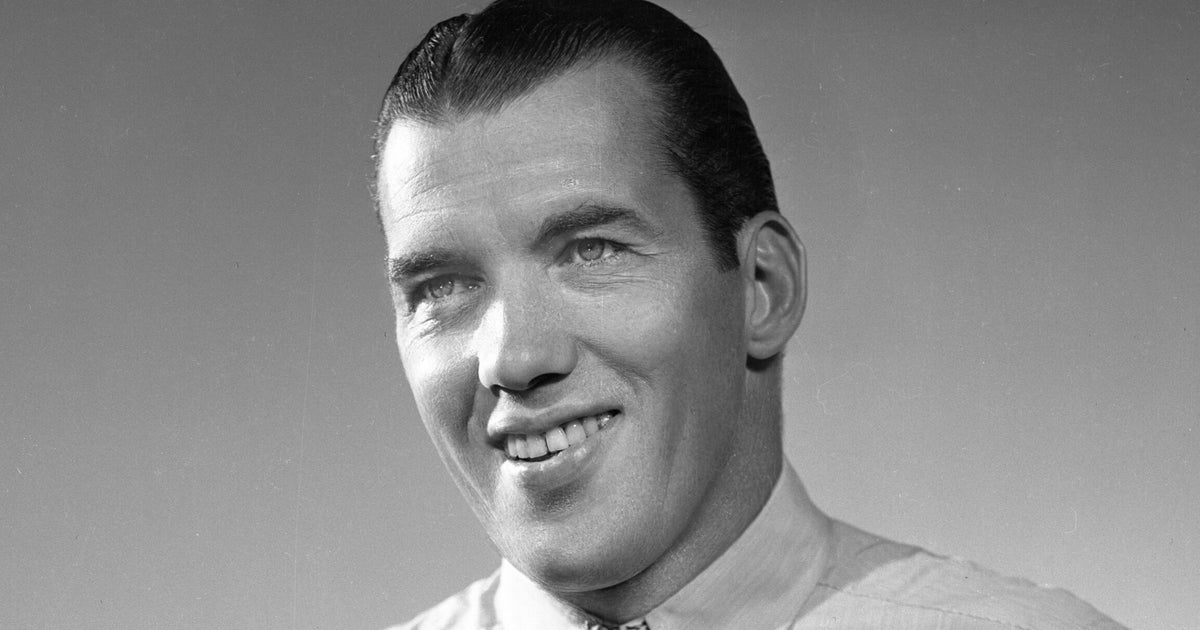

Long before “In Living Color” became a hotbed for hip-hop talent, before “Soul Train” evolved into the cornerstone of Black music, before “Saturday Night Live” emerged as a pop culture powerhouse. Well before any other American television entity celebrated defining artists of all backgrounds, there was “The Ed Sullivan Show.”
Every Sunday evening from 1948 to 1971, households across the nation gathered around their cozy television sets to tune in to the primetime variety show, as its pioneering host introduced audiences to the most iconic performers of the 20th century. Week after week, Sullivan warmly welcomed a dazzling lineup of legends to his stage — from The Beatles and The Rolling Stones to The Supremes and The Jackson 5 — who captivated millions and, in turn, helped shape the sound and spirit of American pop culture as we know it.
“The Ed Sullivan Show” was the original model for must-see, appointment-viewing TV. And its head tastemaker, who got his start as a syndicated newspaper columnist, embodied the title of “influencer” well before the social media age coined the phrase.
But beyond the buzz, Sullivan’s most enduring impact was found in the risks he took in disrupting the status quo when the rules of television were still being written.
It’s a well-known fact that Sullivan’s classic show was home to groundbreaking performances and historic debuts, making his Sunday night stage a launchpad for nearly every music icon of the time. However, its most significant impact lies in an often-overlooked aspect of Sullivan’s legacy: his deep reverence for Black entertainers.
That understated piece of history is the subject of a new documentary called “Sunday Best,” which explores how the television impresario’s unprecedented show helped break racial barriers in American entertainment. Following its world premiere at the 2023 Tribeca Film Festival, the film finally premiered on Netflix on Monday.

Sullivan, who famously “pointed his finger at the biggest stars in the business,” is best known for hosting one of the longest-running primetime variety shows in broadcast history. But just as importantly, during the height of the civil rights era, he served as a vital gateway for countless talented Black artists, offering them national exposure at a time when few other platforms dared to do so.
“Ed Sullivan’s history is portrayed in a way that Americans think that it was this great show with great talent that had these great ratings,” Kerry Gordy, an executive producer of “Sunday Best,” tells HuffPost. “But what it was for Black people was a place that they could go on Sunday nights and see people that actually looked like them for the first time in history. And they got to aspire to be like these people.”
That cultural significance is partly what inspired Sullivan’s granddaughter, Margo Precht Speciale, to delve deeper into his life in “Sunday Best.” Her decade-long film project began after the 2014 death of her mother, Elizabeth “Betty” Sullivan, Ed Sullivan’s only child.
Speciale was just a kid during the peak era of “The Ed Sullivan Show,” and only vaguely aware of her grandfather’s fame, “because wherever we would go, people would ask for his autograph.” It wasn’t until she got older, though, that she developed a curiosity about her lineage and what role her grandfather played in relation to Black history.
“It was really a personal journey,” Speciale tells HuffPost of producing the documentary. “I just really wanted to learn more about my family, and one thing led to another, and I learned this part of his life that really stood out. It was something I was proud of, that he gave a national platform to Black artists during an era when most network TV shows wouldn’t.”
“I wish I would have appreciated that when I was younger, but I didn’t,” she adds. “And it was through this documentary and all the research that I did that I have a much broader understanding of his impact on American culture.”

“Sunday Best,” directed by the late Sacha Jenkins, is billed as the “untold story” of Sullivan’s pivotal role in championing Black performers through both his activism and his groundbreaking variety show. The title pays homage to the program’s legendary Sunday night slot, which for decades spotlighted the very best in show business. True to Jenkins’ signature style — seen in his tongue-in-cheek docs like “Wu-Tang Clan: Of Mics and Men” and “All Up in the Biz,” about the late hip-hop legend Biz Markie — “Sunday Best” also carries a layered meaning that highlights the film’s deep exploration of race and representation.
“It’s also a homage to the Black community’s ongoing struggle for freedom and equality,” Speciale explains on behalf of Jenkins.
The director’s widow, Raquel Cepeda, adds: “‘Sunday Best’ is also a term that Black Americans use that is rooted in slavery… and now is interchangeable with slang about putting your best foot — literally [and] figuratively — forward.”
That’s precisely what the Black artists on “The Ed Sullivan Show” did every time they graced the stage. Ray Charles, Nina Simone, James Brown, Ella Fitzgerald, Marvin Gaye, Diana Ross, Sammy Davis Jr., Gladys Knight & the Pips, the list goes on.
They, along with many others, knew Sullivan’s platform offered a rare space for Black talent to be seen when it was absent elsewhere on TV. In those show moments, they weren’t just performing onstage for audiences across the country — they were also rewriting what was possible for Black visibility in American media. And Sullivan was the man who helped them do it.

Using rare archival footage, “Sunday Best” examines Sullivan’s trailblazing influence through what Speciale calls an “unexpected lens.” Central to that approach is how Jenkins, who died in May, chose to frame the host’s pop culture legacy through a distinct Black perspective, equating his innovative show to a cultural revolution. To bring that vision to life, Jenkins and Speciale constructed a visual timeline that juxtaposed the show’s most significant moments with the broader social and political events unfolding across America at the time.
“And the story just began to tell itself, honestly,” Speciale notes. “[It was] Sacha’s superb vision.”
The historic theme is clear throughout the documentary, as figures like Dionne Warwick, Otis Williams of The Temptations, and Jackson 5 members Jackie and Tito prop up Sullivan for being a “door opener” for Black artists. Others like Oprah Winfrey, Smokey Robinson and Motown Records founder Berry Gordy also reflect on the powerful impact of seeing non-stereotypical images of Black people on Sullivan’s show during an era marked by widespread racism.
“Imagine being 10 years old, on welfare, watching ‘The Ed Sullivan Show’ in a culture that had no Black people on television,” Winfrey recalls in the film, via archival footage from her former daytime talk show. “And when you first see somebody that looked like you, it represented, literally, possibility and hope.”
That sense of knowingness is seemingly what “Sunday Best” aims to convey, especially to today’s youth, who may not realize how hard-won that representation truly was in those days.
“Sacha believed that it was very important for not only the older Black generation — who he knows is going to love the project, see it and understand it — but [also] the younger generation to see it and get a sense of their history,” says Kerry Gordy, “and what people, Black people especially, had to go through to get to this point of where we’re at now — where we’re free to express whatever [we] want to express.”

“The Ed Sullivan Show” wouldn’t be what it was without its host’s experience as a sharp-tongued reporter for the New York Daily News. And neither would “Sunday Best,” which finds Sullivan — who died of esophageal cancer three years after his iconic show ended — narrating the film via technology that recreated his voice from his own writings, including columns, articles and candid letters.
“I just felt my grandfather would have wanted to tell his own story,” Speciale explains. “And personally, I wanted to hear his voice telling the story, too.”
Sullivan had a knack for being observant in his writing, often penning stories that colored in the humanity of those pushed to the margins of society. “Ed, when he wrote about people of color, his [writing] was a more embracing reflection,” the late Harry Belafonte, one of Sullivan’s many show guests, explains in “Sunday Best.”
That same trait carried over into Sullivan’s broadcast career, which took off after he leveraged his reputation as a newspaperman to become the master of ceremonies for various vaudeville revues, most notably New York’s annual Harvest Moon Ball. As the documentary recounts, it was there that CBS executives took notice and handpicked him to host a new Sunday night variety show, “Toast of the Town,” which later became his eponymous show, turning him into a defining cultural figure.
“You wonder how did this guy, this newspaper reporter who was a little bit awkward, become one of the most famous men in the world,” Speciale says of Sullivan. “At heart, he believed in giving people a voice and lifting up the culture and showing America what it really looked like and sounded like.”
She adds, “The other thing about him being a newspaperman is that he always wanted to get the best scoop. And that’s what he did on [his] show. He translated that in visual form, getting the best acts before anybody else could.”
That also meant booking the acts no one else had the gall to.

The most affecting parts of “Sunday Best” showcase Sullivan’s quiet courage in giving his platform to Black performers as he went toe-to-toe with CBS and conservative sponsors whose views conflicted with his own convictions. These clashes were also around a rather tense time in history when Black artists were heavily scrutinized for simply being, as evidenced by the film’s recollections of gruesome violence — like Otis Williams remembering how The Temptations were shot at on their tour bus, or the time a mob of white men attacked Nat King Cole at a 1956 Birmingham show.
One notable moment in the doc involves Belafonte’s first television appearance, which was nearly derailed after network execs tried to blacklist the entertainer for openly expressing communist views. Though Sullivan states in the film that he “despise[d]” communism as an American, his thinking seemed to evolve after an eye-opening conversation with Belafonte, who clarified that his beliefs stemmed from a deep loyalty to the “human condition,” rather than any particular political regime. Ultimately, Sullivan welcomed the singer onto his show.
“He had a lot of people weighing in on his choices, and he was open to conversation and learning about people and understanding them for who they are and then making his own judgment,” says Speciale, “as opposed to what the network advertisers, sponsors, whoever it was telling him.”
“This wasn’t just a concept with entertainment,” Gordy points out. “It was a civil rights issue.” One that put Sullivan’s show, and even his own life, in jeopardy more than once, as it sat squarely in the crosshairs of hate mail and threats of boycotts for his siding with Black artists.
He didn’t care, though. Sullivan refused to let bigotry dictate the integrity of his show. And those acts of resistance are what ultimately made it revolutionary.
“At a time when television was still segregated and the country was deeply divided, he invited Black artists into American living rooms, not just once or twice, but again and again,” Speciale adds. “He didn’t care if it made advertisers uncomfortable. He cared about talent. That was it. And if you were talented, he would find you and put you on his show. That was what mattered most.”
She adds, “To me, the most powerful part of his legacy is how he used his platform to stand up for what was right, even when it wasn’t popular.”

Much credit is owed to “The Ed Sullivan Show” for shifting U.S. politics through the pillar of Black entertainment. As Belafonte reflects in “Sunday Best,” the civil rights movement “would never have been able to sustain itself with the intensity that it did if there were not subtle forces at play,” like the visibility Sullivan’s platform provided.
That sentiment echoes throughout the film, with figures like Berry Gordy applauding the show for introducing his Motown artists — including a 13-year-old harmonica-playing Stevie Wonder — “in millions of homes across America, right along with the greatest white pop stars of the time.”
“That’s the power of what Ed Sullivan did,” Kerry Gordy proclaims. “Had it not been for [him], we would not have gotten the visibility that we got.”
But Sullivan was just as generous in crediting Black performers for the early success of his show, too, especially during times when he couldn’t afford to book other acts.
“They didn’t care how much money they made. They just thought that the opportunity was worth it,” Gordy adds. “And they supported Ed. It made Ed’s ratings go up. And Ed says that without them, he doesn’t know if his show would have made it, without the Black talent.”
That mutual support paved the way for “The Ed Sullivan Show” to catapult some of the most seminal Black musicians into mainstream culture. Without it, who knows how long it would have taken to course-correct history.
“My grandfather didn’t do what he did for applause,” Speciale notes. “Of course, that was always a bonus. But he did it because he believed in fairness, and he recognized talent.”
The hope is that audiences resonate with that core message that permeates throughout “Sunday Best.” If nothing else, its filmmakers at least want viewers to walk away with a deeper appreciation for the risks Sullivan took going against the grain.
“I really want them to understand that without Ed Sullivan, they would probably not have the advantage of all of the incredible memories [his show provided], whether it’s memories through Stevie Wonder or Marvin Gaye or The Temptations or The Supremes or The Jackson 5 or Sammy Davis Jr., and all that they ended up influencing,” Kerry says. “I want them to take away that it wasn’t easy to get here and that this man put his whole life and career on the line based on his principle of not wanting to discriminate.”
He concludes, “To that end, he is a hero. Because without him, our culture would not be the same.”
“Sunday Best” is now streaming on Netflix.