


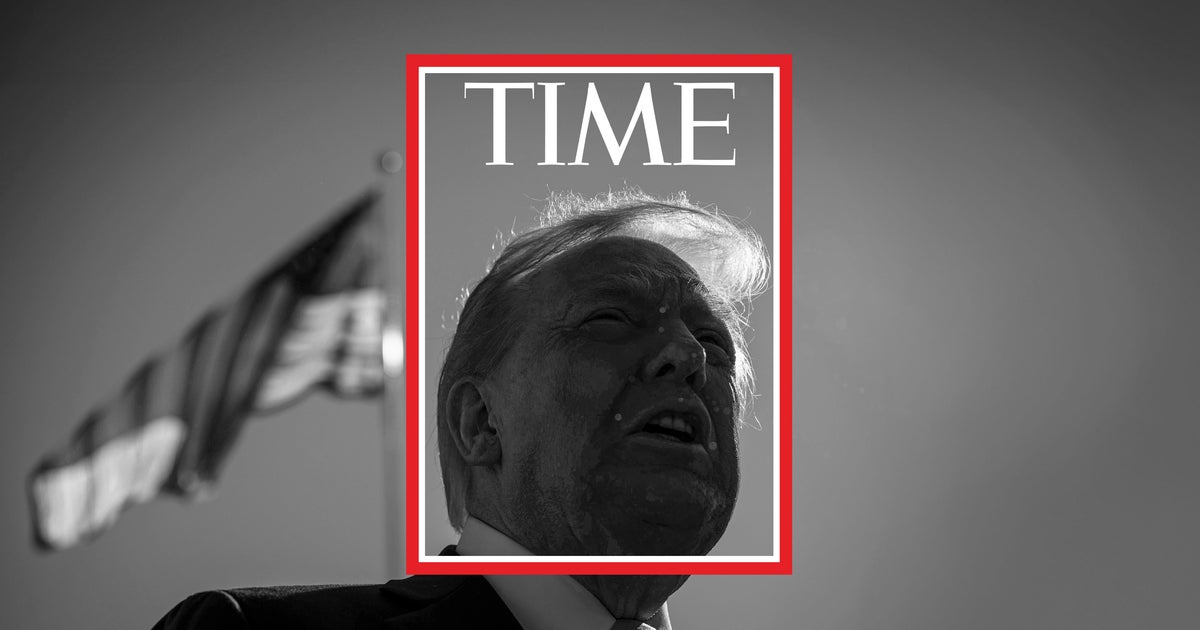
President Donald Trump’s recent outburst over a photo of himself “lends to a pattern of intense hyperfixation” — and that might reveal quite a bit, one therapist tells HuffPost.
In the early hours on Tuesday morning, Trump took to his Truth Social platform to slam his cover photo on Time magazine, writing that the picture was “the Worst of All Time.”
“They ‘disappeared’ my hair, and then had something floating on top of my head that looked like a floating crown, but an extremely small one. Really weird!” he wrote. “I never liked taking pictures from underneath angles, but this is a super bad picture, and deserves to be called out. What are they doing, and why?”
Trump’s disapproval of his appearance on the cover has since garnered a lot of mockery from his critics, including late night host Jimmy Kimmel, who during a segment of “Jimmy Kimmel Live!” on Tuesday night, compared Trump to a “TikTok influencer yelling at her boyfriend for not knowing her angles.”
“It really is remarkable what a big, fragile baby this man is,” Kimmel said.
But Trump has a history of publicly fixating on photos or portraits of himself that he deems unflattering.
In March, he took to Truth Social to gripe about a portrait of himself that had been hanging in the Colorado Capitol for nearly six years. Trump at the time claimed that the portrait, which has since been taken down, was “purposefully distorted to a level that even I, perhaps, have never seen before.”
As some media outlets bow to Trump, HuffPost won’t back down. We’re committed to relentlessly reporting on his actions and holding power accountable every step of the way. Support fearless journalism — join our membership program today.
In a Truth Social post in 2023, Trump accused Fox News of using “horrible pictures” of him. “The coloring, distortions, everything are just so bad. They must sit and look at 100 different shots, and then take the 10 absolute worst,” he wrote at the time.
And in 2017, he said on X, formerly Twitter, that CNN’s book, “Unprecedented: The Election That Changed Everything,” used the “worst” cover photo of him.
Alexandra Cromer, a licensed professional counselor with Thriveworks, believes that Trump’s “tendency to publicly and very visibly criticize photos of himself lends to a pattern of intense hyperfixation and hyperfocus on the ‘self.’”
“Through this pattern of demonstrated behavior, he’s demonstrated that he places a lot of value and merit into his physical appearance, and how he is presented and depicted in the media,” she said.
So what could this mean? Cromer said she believes this behavior can “lend itself to a potential for low self-confidence”
“[People who] are typically very fixated on and place a lot of value on external appearance have a low sense of self and feel that this sense of self is fragile, thus they strive to keep a pre-approved consistency and ‘control’ over how they are portrayed,” she said, later adding that this behavior can be tied to a “deeply held insecurity.”
Cromer thinks Trump’s remarks about his appearance is “surprising behavior coming from a world leader, as his job is to be involved in more political, economic, and social concerns.”
“Typically, in today’s age we see leaders that are less focused on their physical appearance and how they’re portrayed, and more focused on their words, written statements, policies and philosophies of governance in their political position,” she said.
Trump’s fixation on his photos may have to do with how he hopes to be perceived, Cromer said.
Cromer said she believes Trump’s fixation on his appearance in photos may be “directly linked to his desire to be perceived as someone who is powerful.”
“One of his many indicators of his identity is whether or not he is perceived as ‘powerful,’” she said. “Again, his hyperfixation on power and appearance highlight his strong internal narrative that in order to have a solidified sense of self that he is comfortable with, he must have this consistent image of being both all knowing and all powerful.”
Cromer also said that she believes Trump is a “very reactionary person.”
As was the case with his Time magazine cover photo, Trump typically either questions the motives or accuses others of intentionally making him look bad. Cromer said his tendency to do that may reveal a “true view of self and deeply held insecurities.”
“People who are somewhat secure in their sense of self have more intrinsically rooted happiness and self-worth, but those with chronic insecurities and deeply held insecurities tend to find that they rely on external validation and motivation,” she continued.
Cromer said that what this all might reveal about Trump is that he is “someone who needs external validation in order to feel a stable sense of self.”
“And if he does not believe that he will receive that, it feels very personally devastating and detrimental,” she said, before adding: “He’s keeping himself stuck in a cycle that will never fulfill him.”