


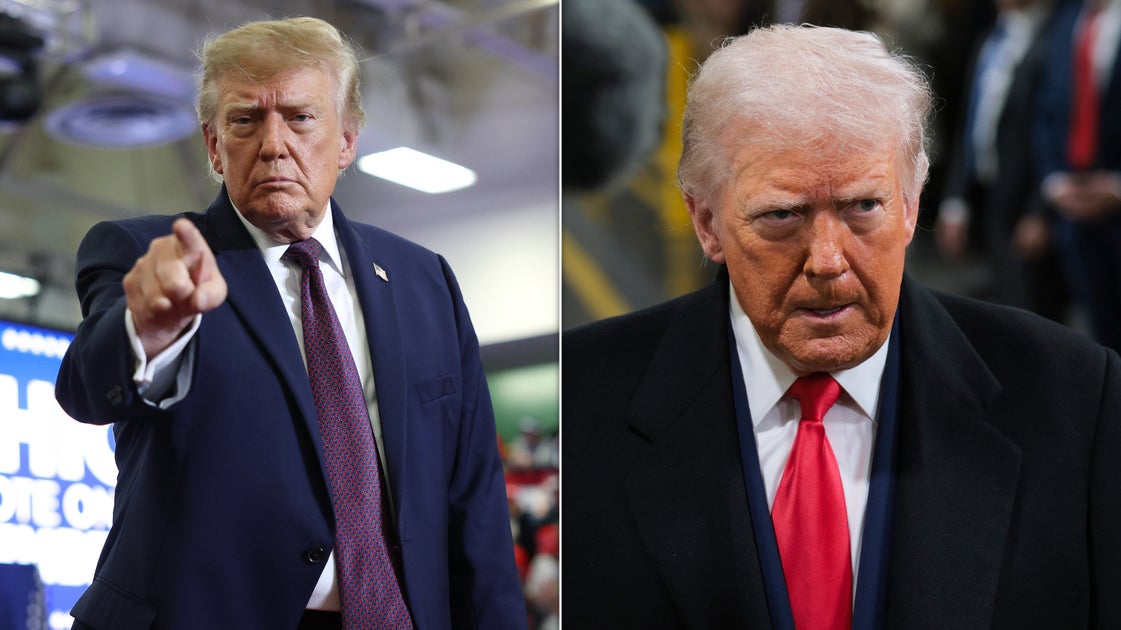
Anyone who has ever watched an interview of President Donald Trump or read his social media posts is likely familiar with his approach to criticism.
He’s verbally attacked journalists who have questioned his decisions and fired back at politicians who challenge his administration’s handling of any situation, from questions from a reporter regarding polling numbers among voters to an attack on Supreme Court justices after they ruled against his tariff policy.
According to Manahil Riaz, a psychotherapist in Houston and the owner of Riaz Counseling, people who respond to criticism in a similar way to Trump do so for several reasons. For Trump personally, it may be a way to protect himself, to show power and even create a distinct political strategy, Riaz said.
Ahead, Riaz and other experts break down their observations:
Trump’s inability to take criticism shows a lack of “good ego strength.”
“I think what we know for sure that he does not have good ego strength,” said Danica Harris, a somatic therapist and coach based in Texas.
When someone has strong ego strength, they’re able to either ignore criticism if it’s unwarranted or calmly address it, Harris explained. For someone with no ego strength, it’s the opposite.
“When you are not certain, when you do not have security within yourself, when you are not a confident human, you will often overfixate ... on the perspective of others and then work to counter that,” Harris said, noting that ego strength requires internal reflection and tolerating the idea that you need to grow or behave differently.
“He has this ego defensiveness that formed as a way to protect himself from ever having to look at himself and ever having to internalize someone else’s feedback,” Harris added.
Just recently, when former President Barack Obama said Trump’s design changes to the White House look like “Saddam Hussein opened a Cheesecake Factory. Just gold everywhere,” Trump couldn’t let the joke go. Instead, Trump verbally attacked Obama, calling him “not a smart guy.”
“Attacking Obama is a way for him to avoid having to accept criticism,” Harris said as an example.
The White House decor jab is arguably the least serious of the things Trump receives criticism about, ranging from the Iran war to midterm rallies to inflation. But Harris said he treats all criticism the same — by attacking the person asking the question and then blaming someone else, whether that’s former President Joe Biden, Obama or “fake news.”
“By focusing on all the things they did ‘wrong,’ he doesn’t have to think about his role as the president,” said Harris. “He’s shifting the focus away from himself so he can blame others.”

Trump refuses to hear feedback that doesn’t align with how he thinks of himself, one therapist said.
According to Sandra Maurer, a licensed professional clinical counselor, Trump “has symptoms very consistent with [those of a narcissist]. And narcissists do not handle criticism well — they don’t handle criticism at all,” she said.
Trump often resorts to sayings like “they’re lying” or “that’s fake news” when faced with a statement he doesn’t like, but he isn’t actually referring to facts here, Maurer said.
“It doesn’t mean factually. It means it doesn’t fit his belief or his worldview,” Maurer added.
In Trump’s mind, if it doesn’t fit in his specific reality, it simply can’t be true, she added. “Factually doesn’t matter. What matters is whether or not he likes it and it fits what he wants.”
Obama’s Cheesecake Factory jab upset Trump because it isn’t consistent with how he sees himself, she noted, “which is that everyone thinks he is amazing and has amazing taste, and he’s so rich.”
“Because that’s what he imagines wealthy and successful people do. That’s what he imagines people aspire to. So, someone making fun of that conflicts with his belief that people are aspiring to be him,” she said.
Trump “projects lots of confidence ... and where anything threatens that, he becomes extremely defensive.”
“He comes through and projects lots of confidence. He identifies as being right, being powerful and successful and dominant, and where anything threatens that, he becomes extremely defensive,” said Riaz.
Admitting fault or taking criticism would take away from that authority and success that he tries to portray, Riaz noted. “For him, it’s important to protect his status.”
He may even look at people who do receive criticism as “weak,” Riaz added, or look at it as disrespect instead of a difference in opinion or valid concern. “It seems like to me he takes it very personally. He’s very sensitive to the criticism,” she said.
It is not an easy task to accept criticism, but those with a healthy sense of self are able to do it.
It isn’t always easy to receive constructive criticism, but those with a healthy sense of self are capable of doing so “without it triggering rage or causing a major conflict,” Maurer said.
“At the most basic level, it is challenging for people to receive information about themselves that is counter to how they see themselves,” Harris said.
“Most people struggle with that, but most people do not struggle with it to the degree we’re talking about with [Trump],” Harris continued. “When people do not work on their defensiveness, when they don’t work on their protective strategies, when they don’t work on their ego strength, when they don’t work on their sense of self, they’re more likely to be challenged to accept feedback at all, but especially criticism.”
His frequent attacks on those who disagree with him or criticize him may even serve as a distraction from what’s really going on in the world, Riaz said.
“A part of that political strategy is also that the opponents might spend some time responding to him than actually working on the actual issues,” she noted.
Perhaps it’s a distraction from increased gas prices or inflation at the grocery store. “His defense response shifts the attention away from the original issue,” Riaz added.