


Congressional Democrats believe it’s time to push for a higher minimum wage after winning House and Senate majorities in last week’s blue tsunami.
As for what number it should be raised to? They’ll have to get back to you.
“We’re having those discussions,” Rep. Debbie Dingell, co-chair of the Congressional Labor Caucus, told HuffPost on Tuesday when asked whether party consensus was growing around a minimum wage.
As for what number Dingell herself would push for, “I’m working on it,” the Michigan Democrat said.
The federal minimum wage of $7.25 per hour may not go anywhere while President Donald Trump remains in office for the next two years. But their trouncing of Republicans in the midterm elections has given Democrats far more leverage to push the president on one of their signature issues — and puts them in a much stronger position to implement a wage hike if they can retake the White House in 2028.
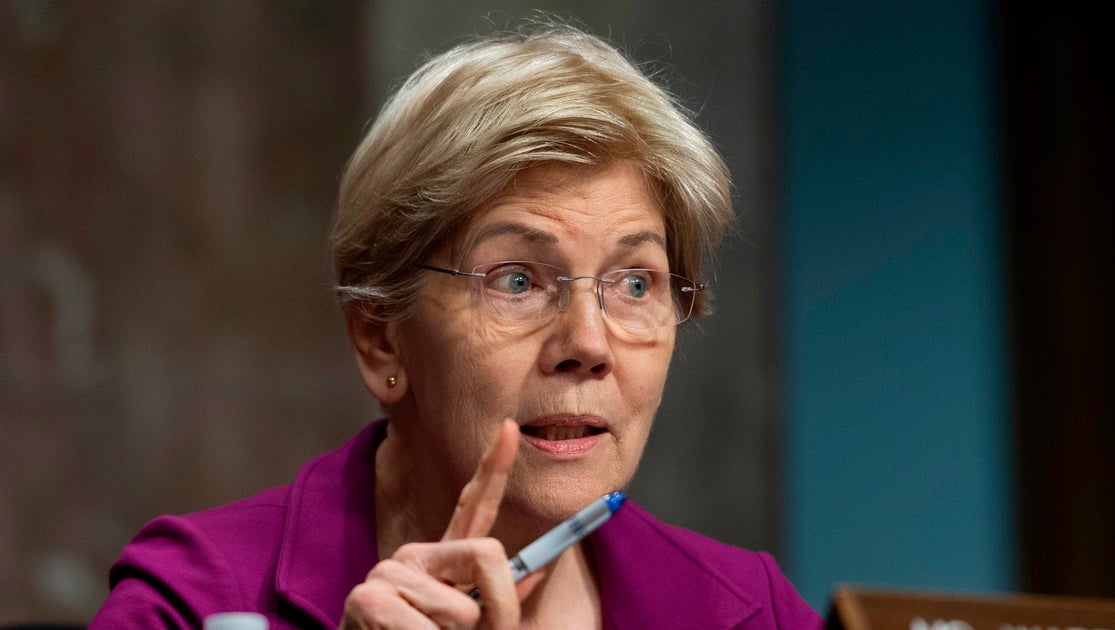
Sen. Elizabeth Warren, one of the leaders of the party’s progressive wing, said Tuesday that a minimum wage hike should be part of the “popular, meaningful legislation” Democrats put on Trump’s desk to show voters they’re serious about governing.
“Dare him to veto an increase to the minimum wage for hard-working Americans,” the Massachusetts Democrat told a crowd on Tuesday.
But before they can even get that bill vetoed, the newly ascendant Democratic Party will have to coalesce around the details of a raise. That might not be as simple as it sounds. Many Democrats have endorsed a gradual hike to $17, but others have pushed for more aggressive raises to $20 and even $25.

It is just the sort of issue that creates friction between the party’s progressive and moderate factions. Even so, Rep. Bobby Scott (D-Va.), the likely chair of the next House labor committee, said he’s confident his colleagues will eventually reach harmony on the issue.
Last year, Scott and Sen. Bernie Sanders (I-Vt.) proposed boosting the wage floor to $17 by 2030. Sanders is likely to be the chair of the Senate’s labor committee.
“I think we start there,” Scott told HuffPost of the $17 bill. “If you get it higher, that’s fine. You just have to pass, obviously, the Senate.”
Referencing Sanders and himself, he added, “I don’t think it would hurt either of our feelings if it went higher.”
The $7.25 federal minimum wage prevails in the 20 states that don’t currently mandate a higher one. It hasn’t been raised in 17 years due to Republican obstruction in both the House and Senate. That dry spell is by far the longest on record since Congress created a federal wage floor during the Great Depression. Eighteen states currently have a minimum wage of at least $15 for much, if not all, of their workforce.
For several years, most Democrats rallied around $15, thanks to the Fight for $15 labor campaign that spearheaded strikes in the fast-food industry. But it’s been 14 years since McDonald’s workers first started picketing with $15 signs. The cost of gas, groceries and just about everything else has increased significantly in the meantime, leading many Democrats to believe a far more ambitious raise is in order.
“For many of us, we would like to see us be as bold as possible.”
- Rep. Mark Pocan (D-Wis.)
In February, Sen. Ruben Gallego (D-Ariz.) proposed boosting the minimum wage to $20 by 2029, at the time setting a new marker for progressives on the issue. “This should be one of our core tenets as a caucus,” he told HuffPost at the time, predicting Democrats would be able to move on it after the midterms.
Then, in April, Democratic Reps. Delia Ramirez (Ill.) and Analilia Mejia (N.J.) proposed a bill that would force large employers to pay at least $25 per hour by 2031. It currently has 34 cosponsors. Sen. Chris Murphy (D-Conn.) later rolled out an identical $25 bill in the Senate with four cosponsors signing on.
All the Democratic proposals these days include tying the minimum wage to an inflation index after the initial raises, so that the wage rate increases right along with the cost of living.
The idea of raising the minimum wage is an extremely popular one that pretty much always polls well. Trump has done nothing while in office to raise the minimum wage but has signaled at times on the campaign trail that he might be open to it. His ambivalence on the issue has been comical at times. “I would leave it and raise it somewhat,” he told Fox News in 2016.
Vetoing a minimum wage bill would be a tough look for the president and his party, especially after voters made clear last week that they want to see their paychecks go further.
Rep. Mark Pocan (D-Wis.) told HuffPost on Tuesday that whatever plan Democrats come up with, it should be forceful enough that Congress won’t have to pass another raise a couple years down the road because it was insufficient. Pocan was one of the backers of the $25 proposal.
“There’s a lot of different proposals out there,” he said. “For many of us, we would like to see us be as bold as possible, and then obviously have something where we don’t have to continue to do this, because Congress isn’t so good at getting it done.”
He added, “That’s where there’s probably some consensus. But what exactly — what rate, by what year — I think is what we’re still figuring out.”