


Democrats increased the debt limit by $2.5 trillion Tuesday to end the partisan game of chicken over the fate of the economy ― for now, at least ― and give the government borrowing power until after the 2022 midterm elections.
Congress raced to raise the debt limit before the Treasury Department reached its borrowing limit on Dec. 15, at which point the country would have defaulted.
The bill was the result of an unnecessarily complicated deal with Republicans to allow Democrats to increase the debt limit along party lines.
For months, Republicans have obstructed any meaningful effort to raise the debt limit in protest of Democrats’ Build Back Better agenda, which currently proposes to invest more than $1 trillion in green initiatives and an expanded social safety net.
Republicans wanted Democrats to shoulder the political burden of increasing the debt ceiling ahead of the next election cycle. The debt limit must be raised regardless of Democrats’ future agenda, as it pays for debts already accrued. It should be noted that Congress raised the debt limit three times under former President Donald Trump’s leadership, and it’s not clear that voters even really understand what the debt limit is.
Under Senate rules, any stand-alone vote on the debt limit would be subject to the filibuster — a 60-vote threshold for passage. And Republicans were adamant they wouldn’t vote alongside Democrats to raise the debt limit, or allow for the increase to be passed unanimously. The resulting game of chicken threatened Americans’ Social Security checks and veterans’ benefits, and carried the risk of an economic recession.
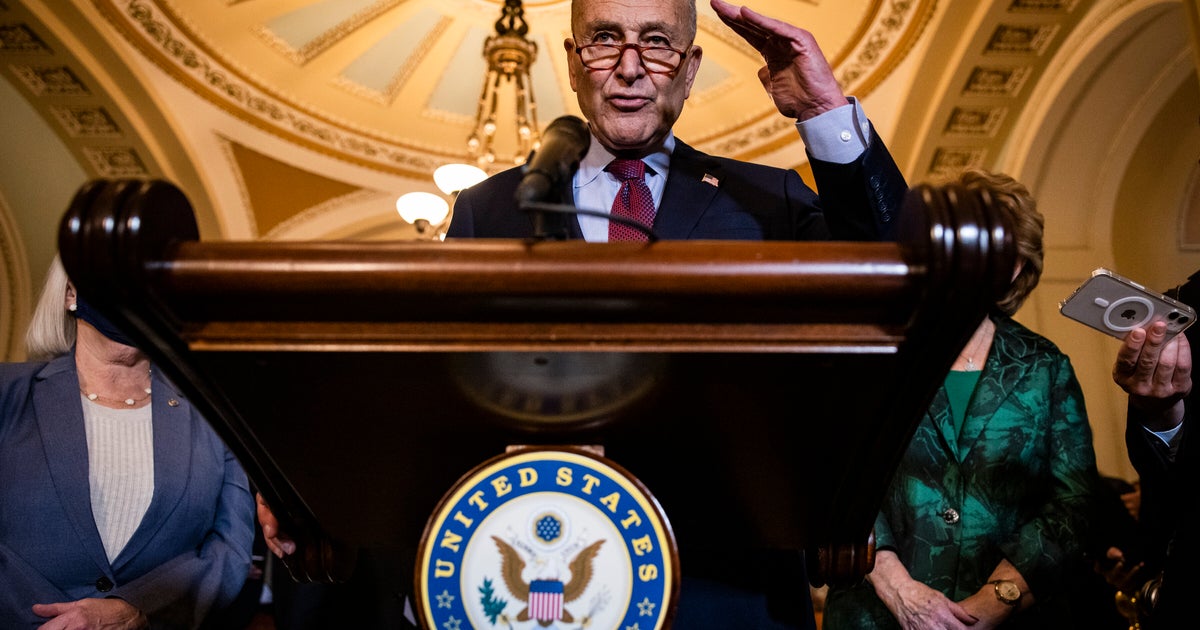
Finally, last week, Senate Majority Leader Sen. Chuck Schumer (D-N.Y.) and Minority Leader Mitch McConnell (R-Ky.) struck a deal: Republicans voted to support a bill that would lift the filibuster one time for the debt ceiling bill, which Democrats passed on their own Tuesday.
“It’s a very good outcome for the American people. We will avoid default, which would have been disastrous,” Schumer told reporters last week. “Democrats always said that we were willing to shoulder the load and 50 votes to get this done, as long as it wasn’t a convoluted or risky process, and Leader McConnell and I have achieved that.”
It was a convoluted process, however, and one that allowed Republicans to claim they didn’t explicitly vote to increase the debt limit ― even though they facilitated an expedited process for the debt limit to be raised.
While there were much simpler ways to do this, the vote is a huge sigh of relief for Democrats in the short term as they rush to find enough support for the Build Back Better agenda. Schumer has vowed to get a vote on that legislation by the end of the year. It also means Democrats can rest easy until after the 2022 midterms.
That said, the timeline sets up possible debt showdowns under Joe Biden’s presidency. This time around, Republican leaders didn’t have much leverage to actually win spending cuts over the debt ceiling fight.
But that will change if Republicans take control of one or both chambers of Congress next year.
Already, conservative Republicans are warning that if they take back control of Congress in 2022, they plan to pick a fight over the nation’s debt and push for some real spending cuts.
They’re being egged on by Trump, who didn’t appear to care much about the debt ceiling when he was president, and actually advocated to get rid of it altogether.
Nonetheless, Trump took a swipe at McConnell in a statement, saying he “didn’t have the guts to play the Debt Ceiling card, which would have given the Republicans a complete victory on virtually everything.”