


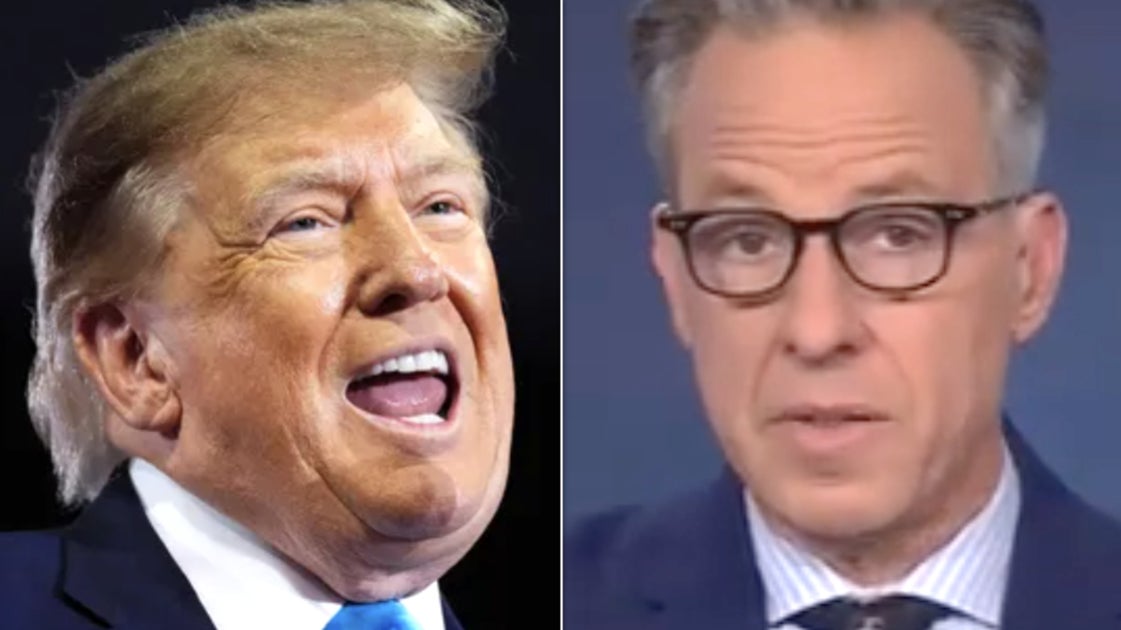
CNN on Monday broke down a clip of President Donald Trump telling the same story twice in a speech.
After showing snippets of Trump’s 23-minute ramble about the Reflecting Pool, CNN host Jake Tapper noted a New York Times study that found a marked increase in the president’s long-winded “head-scratching moments” that feature more profanity and less coherence.
Tapper pointed to a “striking example” from The Times about the president repeating the same story within 30 minutes at a recent midterm rally.
The anecdote involved a George H.W. Bush ad framing Democratic rival Michael Dukakis as soft on crime in their 1988 presidential race. The spot featured Willie Horton, a Black man who committed rape and assault after he was furloughed from prison in Massachusetts, where Dukakis served as governor.
Tapper played both moments where Trump recounted the same story.
“How much did you find in your analysis the president repeating himself?” Tapper asked Dylan Freedman, who co-authored The New York Times study.
Freedman noted that the AI-assisted analysis extended back to 2015, when Trump began campaigning for president.
“President Trump is sort of going into these rambling, digressive passages about two and a half times more often than he used to,” Freedman replied.
Tapper pointed out how the Times report also revealed a spike in his cussing and rudeness. He replayed a recent exchange with a journalist whom he called “disgusting” and looking like “hell.”
Asked how much Trump has changed on that front in the last decade, Freedman answered, “If you listen to Trump 10 years ago, it’s amazing how much more sort of normal, less coarse, he sounds. And we found that he’s using swear words almost three times as much as he was then. We’re not doctors, but some medical experts point to that as a sign of age-related disinhibition.”