


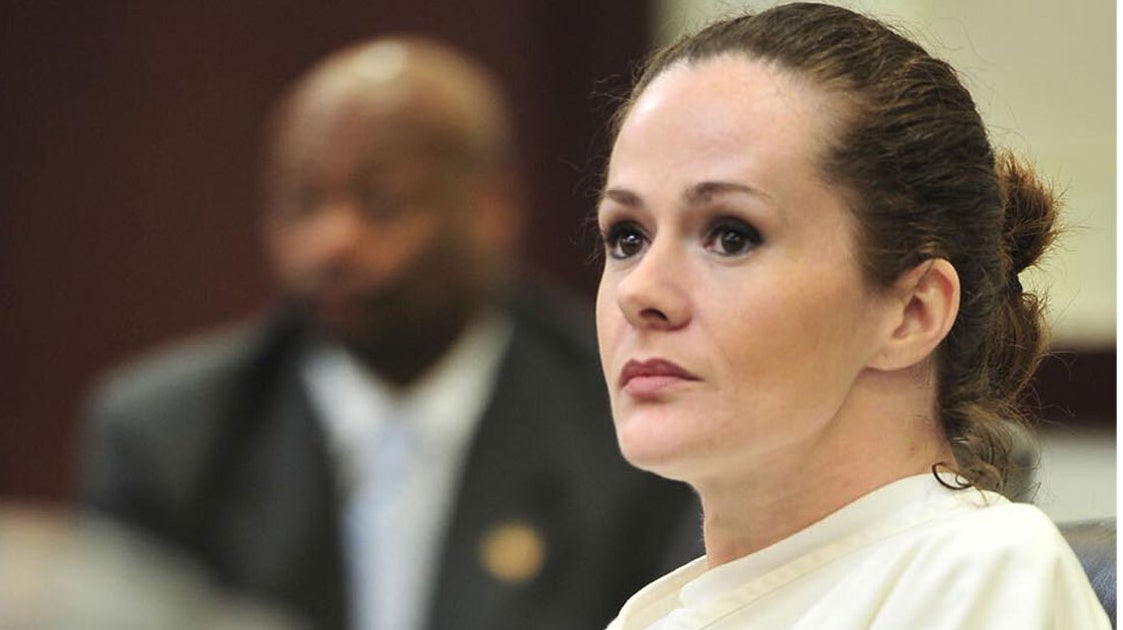
A Tennessee judge has granted a request to preserve all evidence related to the botched execution of Christa Pike, while a state attorney declined to say whether a second execution attempt would be made.
The judge in Davidson County Chancery Court ordered that anything in the state’s possession that was in the execution room, including medical equipment and paper and electronic recordings, “needs to be preserved and maintained” at her attorneys’ request.
Pike’s legal team has argued that the evidence would show the Tennessee Department of Correction violated her constitutional rights by subjecting her to cruel and unusual punishment after failing to kill her through lethal injection.
Officials attempted to execute her last week with two doses of pentobarbital as punishment for the 1995 murder of a 19-year-old classmate.

She was taken to the hospital by ambulance and was believed to be brain dead. There were plans to take her off life support, but, in a “shock to everyone,” she woke up Tuesday and began talking, attorney Randy Spivey told reporters following the hearing.
“Christa has a long road to recovery,” he said, describing her as unable to swallow or move either arm.
“All of this was foreseeable and foreseen,” he said, with her attorneys arguing they had warned that lethal injection would be difficult because of the small size of her veins.
“There’s still a lot of cognitive confusion,” Spivey said of her mental state. She’s asked about her situation, is aware of “what they did to her, up to a point” and is “angry and confused, about everything.”

Luke Ihnen, a second attorney representing her, told the judge, “The state has made no promises that it will not seek a future execution,” and that if a second execution is attempted, “the same thing is likely to happen.”
When asked by the judge, Tennessee Assistant Attorney General William Ayers declined to say whether the state would attempt a second execution, saying any new execution order would come from the state’s Supreme Court and there’s no suggestion one is coming.
“Without a pending execution order, at least as we stand here today, there’s no showing that Ms. Pike is subject to execution again,” he said.
Nashville attorney David Raybin, who wrote Tennessee’s death penalty statute in 1976, said Pike’s medical situation doesn’t wipe clean her death sentence and that the state is responsible for her medical care, even if it means keeping the death row inmate alive.
“The state is the one that put her in the hospital, not herself, so therefore the hospital is obligated to treat her,” he told HuffPost on Tuesday before news of her condition improving.
“The state is the one that put her in the hospital, not herself, so therefore the hospital is obligated to treat her.”
- Attorney David Raybin
Pike is to be treated the same as any other prisoner who’s receiving medical care. If she ends up requiring long-term care such as life support, as it was reported earlier this week, the state must cover the costs until she recovers or her family decides “how long they want to keep her,” he said.
“They stay there until they’re better, and they either die or they go back to prison,” he said.
While Pike’s case is highly unusual, she wouldn’t be the first inmate to be ordered a second execution after the first failed.
In 1947, the U.S. Supreme Court infamously weighed in on whether a Louisiana inmate who survived an electric chair execution attempt, which successfully ran electrical current through his body, should undergo the procedure a second time.
In that case, the court ruled that a second attempt to electrocute Willie Francis, a Black teen convicted of murder, would not violate the double jeopardy clause of the Fifth Amendment or the cruel and unusual punishment clause of the Eighth Amendment. The justices called what happened an “unforeseeable accident” and said: “Accidents happen for which no man is to blame.”