


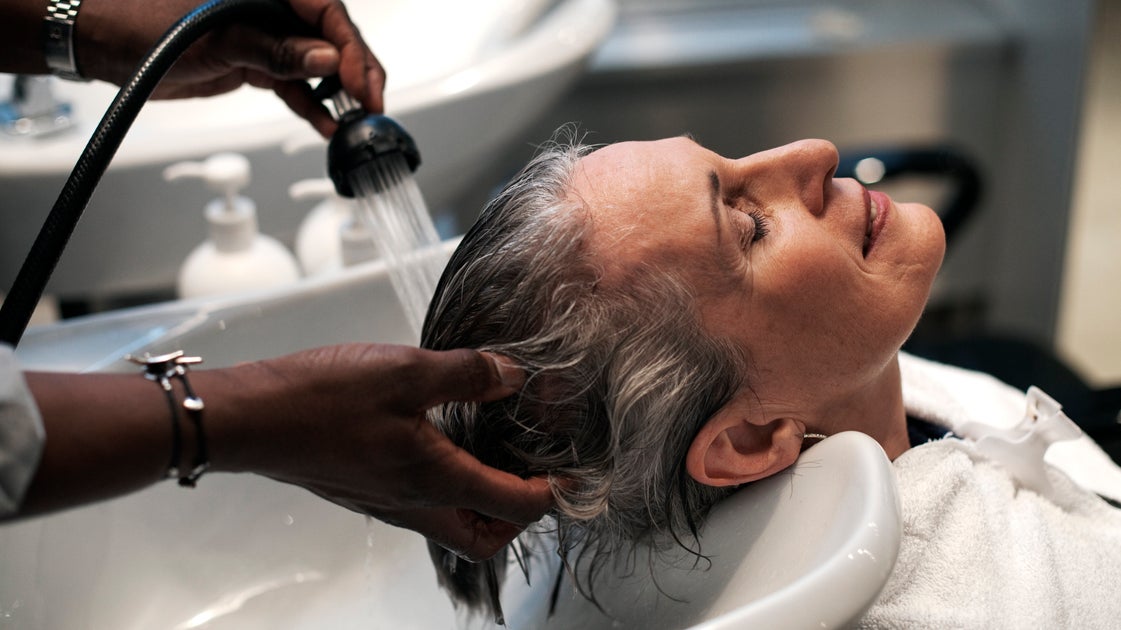
It’s becoming increasingly popular to embrace your gray hair, as seen by celebrities like Sarah Jessica Parker and Laurie Metcalf.
Whether you decide to embrace your gray hair or not is a personal choice, and no matter your verdict, experts have tips for the best way to treat it.
What causes gray hair?
Technically, gray hair doesn’t exist; it’s white hair with some of the pigment of your natural hair color. Individual strands are never gray.
Like our skin, the hair follicles contain two types of melanin pigment: eumelanin, which is dark brown to black and pheomelanin, which is yellow to red. Even naturally blond hair contains melanin, but at a much lower percentage. The only true lack of melanin happens in people with albinism or graying hair.
While age is the most common culprit of gray hair, it can also be hereditary and start earlier in life, sometimes as early as teens or 20s.
“I see stress being a huge factor among younger people, including oxidative stress, pollution, smoking, and poor diet and nutritional deficiencies,” said Leslie Shores, a color specialist at Eric Marshall Salon in Nashville, Tennessee.
Gray hair tends to be coarser and often behaves differently than your natural hair color, which is why it may feel like you have to re-learn what to do with it, from styling to coloring. “It can feel coarser or wirier, and it can also be more resistant to coloring,” said Weena Jerome, hairstylist, educator and founder of Renaissance Curls in New York City.
But it’s not just your hair that changes color…
In fact, while your hair goes gray with age, your skin also loses some of its pigmentation and the framing of your face changes, so you shouldn’t treat your hair color as before.
In fact, if you are over 50% gray, even how you dress may change. Your skin’s undertone (warm or cool) stays the same, but your overall coloring becomes softer, or the warmth lessens, so the colors of clothing and makeup that suit you may slightly change, too.
Overall, “learning how to work with your existing pigment might be best,” said Tia Rotenberg, a hair colorist based in Dallas and New York City.

Here are the most common mistakes hair colorists see and what they recommend instead.
Choosing the wrong shade of permanent box dye
This is by far the number one mistake colorists see, as most people pick a darker shade of permanent box dye, which may make them look harsher and can also result in excessive coloring and damage on the ends.
“When people start coloring their naturally gray hair at home, they automatically think they need to reach for a box color that once resembled their natural hair. For me, using a demi-permanent product that will softly cover their natural grays is best,” Rotenberg said.
Jerome echoed that sentiment: “One of the biggest mistakes I see is using permanent box color to go very dark, especially black, and then applying it all over the hair every single time the gray comes in. You really only need to color the new growth.”
The main issue is the permanent color applied all over, not the box dye per se, so Shores suggests choosing a brand that doesn’t contain ammonia. “All over permanent color with ammonia creates more maintenance and a stark line that grows out at the root,” Shores noted.
Dyeing all your hair every few weeks
As mentioned, instead of only touching up the gray roots, many choose to dye their hair all over every few weeks, which can be very damaging over time, leaving the hair dry and brittle.
“You are repeatedly opening and sealing the cuticle, causing excessive wear and tear and damage by applying more and more pigment when it’s not needed,” noted Rotenberg.
Not using lowlights
Trust a professional who will most likely apply lowlights to enhance your natural hair color and blend in the gray. This works whether you want to cover your grays or let them shine. Depending on the amount of gray you have, your colorist will either do lowlights, highlights or both. “I blend the gray with some lowlights or highlights or both. I prefer to do this by hand-painting balayage because it looks the most natural, with the least amount of maintenance or damage,” Shores said.
“You can also use the gray to your advantage, by coloring just the gray hair so it almost look like highlights against the natural hair color,” Jerome said.
Letting your gray hair go brassy
Choosing to stick with the gray hair and forgo dyeing it still requires some color maintenance. Gray hair can easily pick up pigmentation from the environment or other factors; medications, sun exposure, smoking, pollution, minerals in the water, chlorinated pool water … all of which can leave it looking yellow, brassy, muddy or even greenish.
To tackle this problem, introduce a clarifying shampoo once a week, to deeply cleanse out the minerals. Rotenberg recommends the Un-Do-Goo by Malibu as it prevents hard water from settling on the hair. Shores recommends Solu or NaturalTech rebalancing shampoo, both by Davines.
Adding a purple shampoo will minimize brassy tones. “I recommend using a purple shampoo to neutralize that warmth and make the gray or white hair look brighter,” Jerome said.
If you’d rather have an in-salon treatment, those can remove many unwanted pigments with ease.
Not all at-home products are bad.
While experts would rather you steer clear of permanent box dye, they do recommend solutions for in-between appointments, like demi-permanent hair dyes and root cover-ups.
“If a client doesn’t want to go to the salon every month, I’d rather they use a temporary root cover between appointments, rather than continuing to layer permanent color over the hair,” Jerome said.
“I recommend the Dp Hue Color Dream, a demi-permanent, ammonia-free product with a low percentage accelerator. I work hands-on with the product and I can ensure my clients have proper gray coverage until their next appointment,” Rotenberg said.
“I would suggest a temporary spray or powder to help cover the gray. My favorite ones are from Color Wow and Oribe,” Shores added.
So what’s the best way to cover grays?
The coarser the gray, the harder it is to cover. There are various approaches depending on your specific hair and needs. “The ideal way to cover grays is not trying to conceal them 100%,” Rotenberg said.
Creating a soft appearance around the hairline will give the most natural look, she explained.
“Also, maintaining a few pearly bits throughout the hair can give the appearance of soft highlights without needing to darken the hair too much,” Rotenberg added.
“If lowlights or highlights no longer work, I suggest a non-ammonia demi-permanent all-over color which can cover up to 70% gray or just to blend the gray,” Shores said. Demi-permanent colors are more translucent and require less maintenance. The next step, if the coverage isn’t enough for the client, is a permanent color; Shores prefers a non-ammonia one.
And what’s the best way to embrace grays?
If you love your gray and want to embrace it, the best way, per the experts, is a clear gloss or toner to let it shine.
“I would do a clear gloss on its own, or a clear gloss with just a splash of violet or cool tone added,” Shores added.
“I always recommend a gloss with a sheer pearly finish that mimics their natural gray hair, only enhanced. When styled natural or even blown out smooth, it just gives a very elevated appearance,” Rotenberg said.