


The American Bar Association, the largest national group representing lawyers, sued in federal court to permanently stop President Donald Trump’s extortion of law firms on Monday.
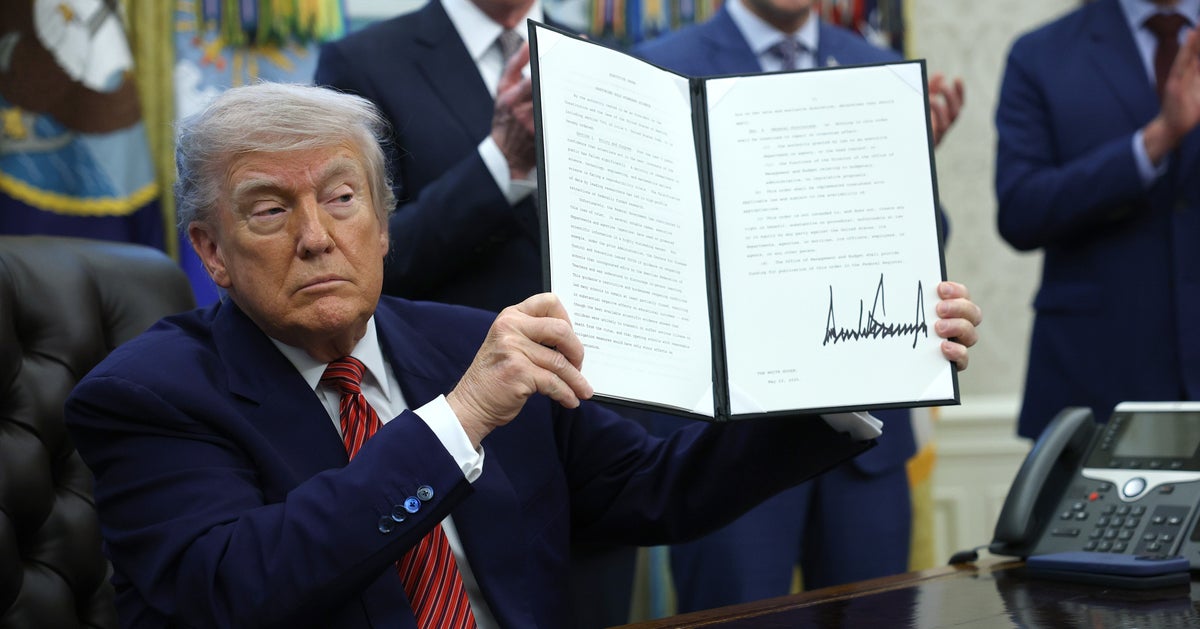
Soon after taking office for his second term, Trump issued a series of executive orders targeting seven law firms with punitive sanctions for political reasons. The orders acted as an opening salvo in an attack on Big Law to pressure law firms into “deals” with the administration that would restrain them from challenging Trump’s policies.
After Trump hit the venerable New York firm Paul, Weiss, Rifkind, Wharton & Garrison with an executive order on March 14 banning its lawyers from contact with the federal government and access to federal buildings, and stripping its lawyers of security clearances, which would have effectively ended its ability to work, the firm’s partners agreed to an informal deal to make the order go away. The firm pledged $40 million in pro bono services to the administration and to end Diversity, Equity and Inclusion practices. It also removed nearly all mention of its pro bono work challenging the immigration policies of the first Trump administration from its web site.
In the following weeks, eight law firms entered into preemptive deals with the administration to avoid the threat of a punitive order by pledging a total of $900 million in pro bono services. A chill settled over Big Law as the firms that entered into these deals, and others fearful of being targeted, curtailed or halted their pro bono work on causes that might anger Trump, in particular providing services to immigrants and immigrant rights groups.

Trump’s extortion of law firms via executive order “is unlawful,” the ABA lawsuit states. “Our Constitution does not vest the Executive Branch with the power to point to individual lawyers or law firms, declare by executive fiat that their work or their internal policies are ‘against the national interest’ or otherwise illegal or improper, and direct (or threaten) executive action against that lawyer or law firm.”
The lawsuit points to four judicial decisions that already found individual orders targeting law firms are unconstitutional. Those cases ― brought by the targeted firms Jenner & Block, Perkins Coie, Susman Godfrey, and Wilmer Cutler Pickering Hale and Dorr ― struck down each order targeting each individual firm, but did not block Trump from issuing or threatening future such orders.
In each case, the administration has chosen not to appeal in order to avoid a negative ruling against it that could put an end to all future orders. That has left a chill hanging over the legal community as Trump “threatens to destroy … the independence of the American bar.”
“Even as federal judges have ruled over and over that the Law Firm Orders are plainly unconstitutional, law firms that once proudly contributed thousands of hours of pro bono work to a host of causes—including causes championed by the ABA—have withdrawn from such work because it is disfavored by the Administration, particularly work that would require law firms to litigate against the federal government,” the lawsuit states.
This chill directly affected the ABA “as it has had to forgo litigation against the Administration because counsel who previously were willing to take on such work are no longer willing to do so,” according to the lawsuit.
In addition, a law firm that has represented the ABA on law school accreditation issues since the 1980s told the association that it “is no longer willing to represent the ABA in any litigation against or potentially adverse to the Administration and its policies.”
The ABA is being represented by Susman Godfrey, one of the firms that won a lawsuit challenging an order targeting it. The suit was filed in the D.C. district court.