



One of the first steps of responsible allyship is educating yourself on the issues you purport to support.
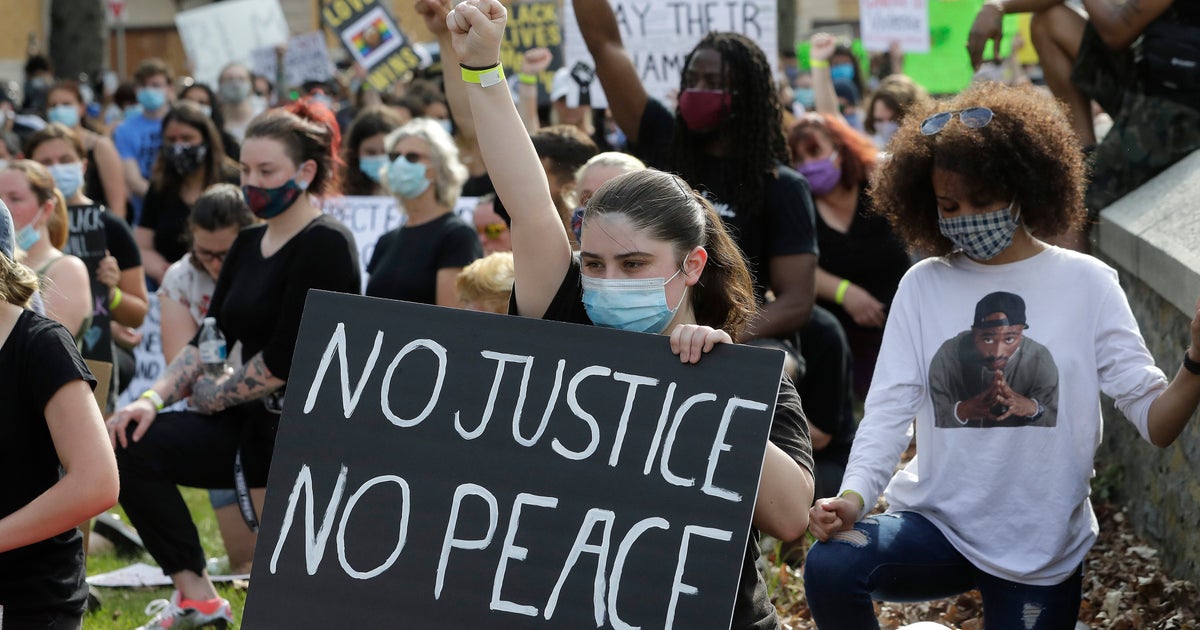
Right now, that step feels more pertinent than ever, as Black Lives Matter protests following the death of George Floyd continue across the United States and around the world.
For allies of Black people and the Black Lives Matter movement, particularly white allies, you may be afraid to speak out and ask questions, or not want to burden Black people with educating you. It’s on us to take the time to educate ourselves if we aren’t already aware of how racism impacts the world around us.
You’ve likely seen various iterations of anti-racist readings lists circulating on social media this week, and those are great! It’s important to deeply consider these issues not just now, but every day. It’s also important to support Black organizations and businesses.

But more of us than would like to admit still need to start with the basics. Do you know what systemic racism is? Or what makes a microaggression? What’s your understanding of white privilege?
It’s important to understand these terms, names and phrases and how they impact society. If you are an ally, one of the best things you can do is talk about these issues with other allies. Bring them up in your workplace, and interrogate where the gaps in your own knowledge are.
With that in mind, this is an alphabetical glossary of basic terms, names and phrases to get you started talking about what’s going on right now in relation to anti-Black racism and the Black Lives Matter movement. It’s not an exhaustive list, nor is it supposed to be. It’s a starting point for further reading and further action. Several books have been written on some of these words — this is just the tip of the iceberg.
WATCH: What does it mean to be anti-racist? Story continues below.
One last note: words have power, and how we define them has power. If you are an ally, listen to the communities you purport to support and how they use and invoke these words. Take your cues from them.
Ally:
An ally is someone who is not part of a marginalized group that works to support, uplift and work towards justice for that group.
There are many different ways white and non-Black people of colour can be good allies to Black people, from mobilizing their privilege to enact change, to elevating and amplifying Black voices, to stepping back and listening, rather than dominating the conversation. True allyship is about taking issues of racism or oppression that may not directly affect your yourself up as your cause and doing the work to dismantle them.
Read more: A Guide To Allyship
Anti-racism:
Rather than simply not being racist, being anti-racist is an active state of working to make things better by dismantling racist structures, fighting oppression and working towards justice. According to the Alberta Civil Liberties Research Centre, “Anti-racism is an active way of seeing and being in the world, in order to transform it.” It’s about working in your workplace, school, community and other areas of society to actively challenge racism.
Read more: “How To Be An Anti-Racist” by Ibram X. Kendi.
Black:
Black is used broadly to describe people of African-descent populations, including Caribbean, African American and other diasporic groups.
But its capitalization is also significant. Writer and professor Lori L. Tharps argued in the New York Times in 2014, “Black with a capital B refers to people of the African diaspora. Lowercase black is simply a color.” It’s a way of recognizing Black as an identity, not just an adjective.
“For me, in the era of Black Lives Matter, capital-B Black is an act of defiance against a society that often paints minorities as secondary,” wrote Toronto writer Eternity Martis in 2016.
Read more: “Post-Black: How A New Generation Is Redefining African American Identity” by Ytasha Womack.
Black Lives Matter:
Black Lives Matter was originally created in the U.S. by Patrisse Cullors, Opal Tometi and Alicia Garza as a call to action for Black people after the killing of 17-year-old Trayvon Martin by George Zimmerman. It’s grown into an international movement, with chapters around the world working to oppose anti-Black racism and police brutality in their local communities. There are several chapters across Canada, and the largest is in Toronto.

Derek Chauvin:
Derek Chauvin is the white Minneapolis police officer who is charged in the killing of George Floyd. Two other officers further restrained Floyd while a fourth prevented onlookers from intervening. All four officers were fired after the incident, with only Chauvin initially charged.
On Wednesday, one of Chauvin’s charges was upgraded to second-degree murder and the office of Minnesota Attorney General Keith Ellison charged Tou Thao, Thomas Lane and J. Alexander Kueng with aiding and abetting Floyd’s murder.
George Floyd:
A 46-year-old Black man who died in Minneapolis, Min. on May 25 after Chauvin pressed his knee into his neck for almost nine minutes while Floyd was handcuffed and lying face-down on the street. Floyd was unresponsive for the final three minutes of that time. His death has sparked a wave of protests across the U.S. and around the world after video footage of the incident circulated online. While a Hennepin County medical examiner determined Floyd’s death could be related to preexisting health conditions, an independent autopsy found “evidence is consistent with mechanical asphyxia as the cause” of death, with neck compression restricting blood flow to the brain, and back compression restricting breathing.
Floyd was a father of two daughters, the youngest of which was six years old. According to friends and family, those who knew him best called him “Floyd,” and he had a reputation as “someone who had your back and was there for you when you were down.”